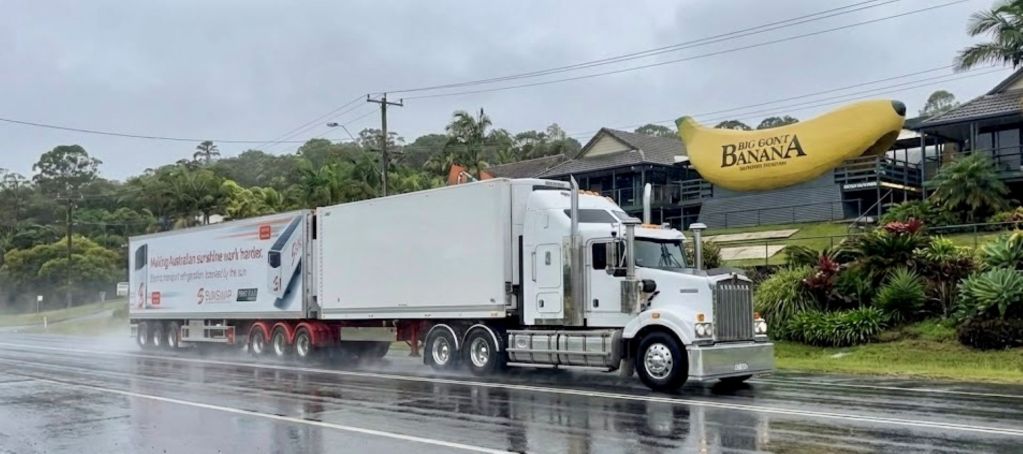
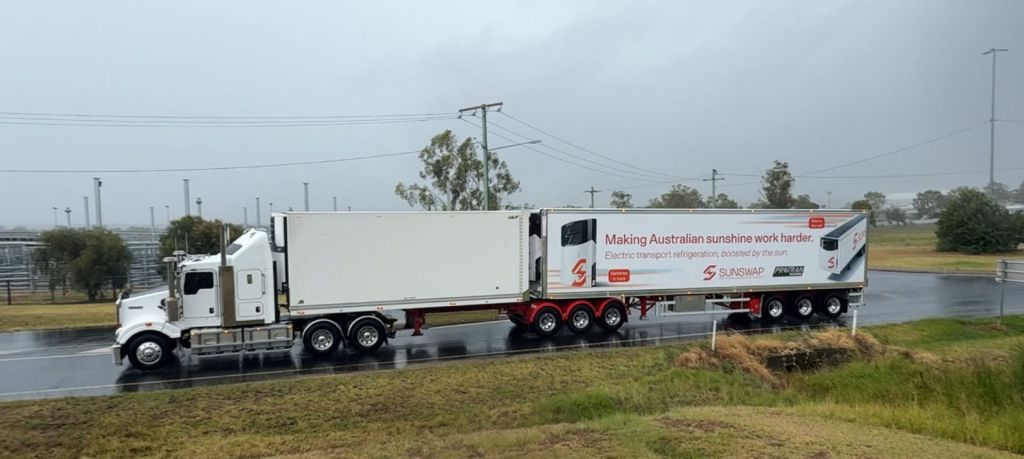
Protran Solutions, with Sunswap Endurance, have successfully completed the world’s longest zero-emission, solar-charged refrigerated transport route, marking a significant milestone in sustainable cold chain logistics.
The landmark trial of the innovative system – set to be on show at the upcoming TruckShowX 2026 event on May 18-19 in the Hunter Valley – covered 1,671 kilometres between Sydney and Brisbane in a return B-double configuration, with the tag, a 22-pallet trailer, operating entirely on battery-electric power charged by solar energy.
The real-world trial demonstrated exceptional performance over 32 hours of continuous operation, transporting temperature-sensitive freight including chilled eggs (+11°C) and frozen meat (-2°C) without any external power input from the truck, trailer, or grid infrastructure.
The results included:
> 100 per cent solar and battery operation – zero diesel consumption for refrigeration;
> 85.9kWh total energy used (27kWh from battery, 58.9kWh generated by solar);
> 64 litres of diesel conserved;
> 172kg of CO₂ emissions avoided – equivalent to the annual carbon absorption of eight trees
> 62 per cent battery capacity remaining at trip completion;
> Successful overnight and early morning operation (seven hours without solar input);
> No power sourced from truck or trailer systems (e-PTO or e-axle); and
> No plug-in shore power required.
Grant Turner, General Manager of Protran Solutions, expresses enthusiasm about the trial outcomes stating, “These field-testing results have proven what we wanted to validate in terms of cold chain capabilities for solar-powered refrigerated transport for depot-to-depot operations.
“The Sunswap Endurance system has proven it can handle the Sydney-Brisbane return route while maintaining precise temperature control for frozen and chilled freight types, all without consuming a single drop of diesel for refrigeration.”
Turner adds: “What’s particularly impressive to our trial partner was the system’s performance during overnight operations when there’s no solar generation and significant parts of the trip had rain as opposed to sun. The battery reserves and energy efficiency meant that the trip completed the entire journey using just 28 per cent which is remarkable.
“This gives operators genuine confidence in the technology’s reliability and opens up new possibilities for sustainable logistics within the cold chain sector.”
The trial route encompassed diverse operating conditions, including a 13-hour loaded journey with chilled eggs during an overnight run, followed by a 19-hour frozen meat transport that concluded with unloading at 2:00am – demonstrating the system’s versatility across temperature ranges and operating schedules.