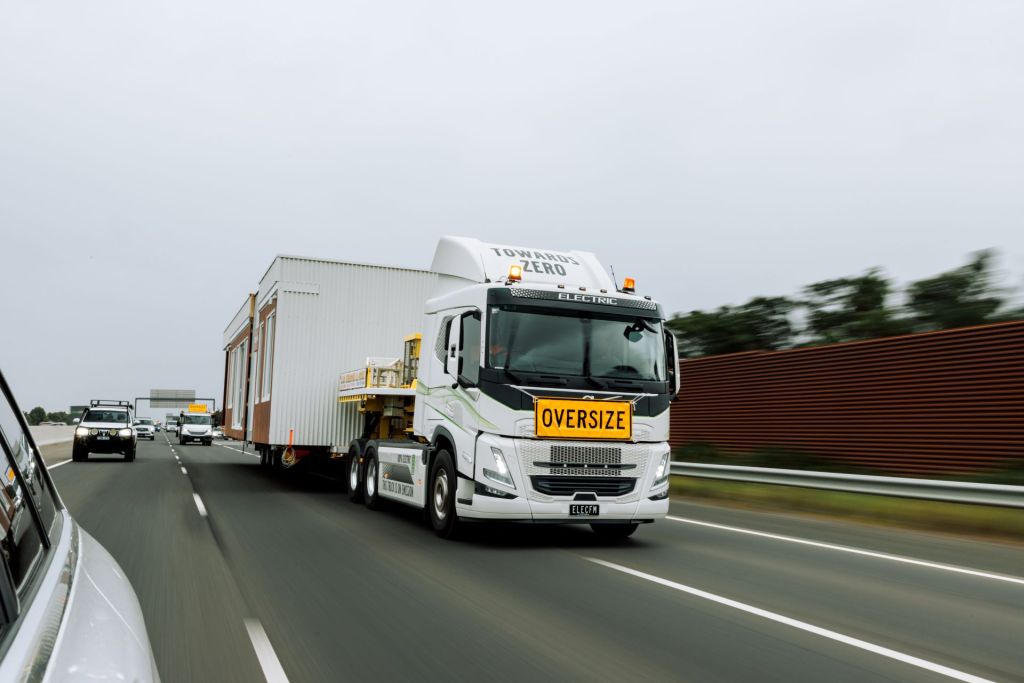
HVIA has welcomed the announcement by the Albanese Government of a $400 million heavy vehicle industry productivity reform package, describing it as a historic step towards improving Australia’s freight efficiency, economic productivity and supply chain resilience.
The reforms, which will incentivise states and territories to deliver nationally consistent heavy vehicle access reforms, support the rollout of zero-emission heavy vehicles and strengthen driver competency frameworks, are expected to boost Australia’s Gross Domestic Product by up to $4.4 billion annually.
HVIA Chief Executive Officer Todd Hacking says the announcement represents an important recognition of the vital role the heavy vehicle industry plays for the nation.
“HVIA welcomes the Government’s commitment to work with states and territories to deliver these reforms and unlock benefits for businesses, consumers and supply chains right across Australia,” he says.
“If it’s on a supermarket shelf, a building site, a farm, a factory floor or a wharf, chances are it spent part of its journey on a truck.
“Freight productivity is not just a transport issue. It is a cost-of-living and economic competitiveness issue.”
Hacking says the Productivity Commission’s report on the potential impact of heavy vehicle reform – written in response to a request from Treasurer Jim Chalmers – had identified the significant economic benefits available through better road access arrangements for high-productivity vehicles and heavy zero-emission vehicles.
“When road freight becomes more productive, the benefits flow through the entire economy. It can mean fewer trips to move the same amount of freight, less road congestion, stronger supply chains and lower pressure on costs before goods ever reach consumers,” he says.
“The Government’s commitment to accelerate the National Automated Access System and remove unnecessary regulatory barriers reflects many of the reforms industry has been advocating for over a number of years.”
For some time, HVIA has called for reforms to streamline access approvals, improve consistency between jurisdictions, accelerate deployment of Performance Based Standards vehicles and support the practical rollout of zero-emission heavy vehicles.
Hacking says successful implementation of the reforms will require continued cooperation between governments and industry, and HVIA stands ready to work with governments and industry to make these reforms work.
“The opportunity now is to move quickly from policy announcements to practical outcomes that operators, manufacturers, suppliers and the broader community can experience,” he says.
“We have world-class vehicle technology available today, but too often it is constrained by outdated processes, inconsistent access decisions and unnecessary delays. These reforms have the potential to address those challenges.
“Better arrangements will also support the rollout of zero-emission heavy vehicles by making sure new technology can be used where it makes sense.
“The freight task continues to grow, and Australia’s prosperity depends on moving more freight safely and efficiently.”