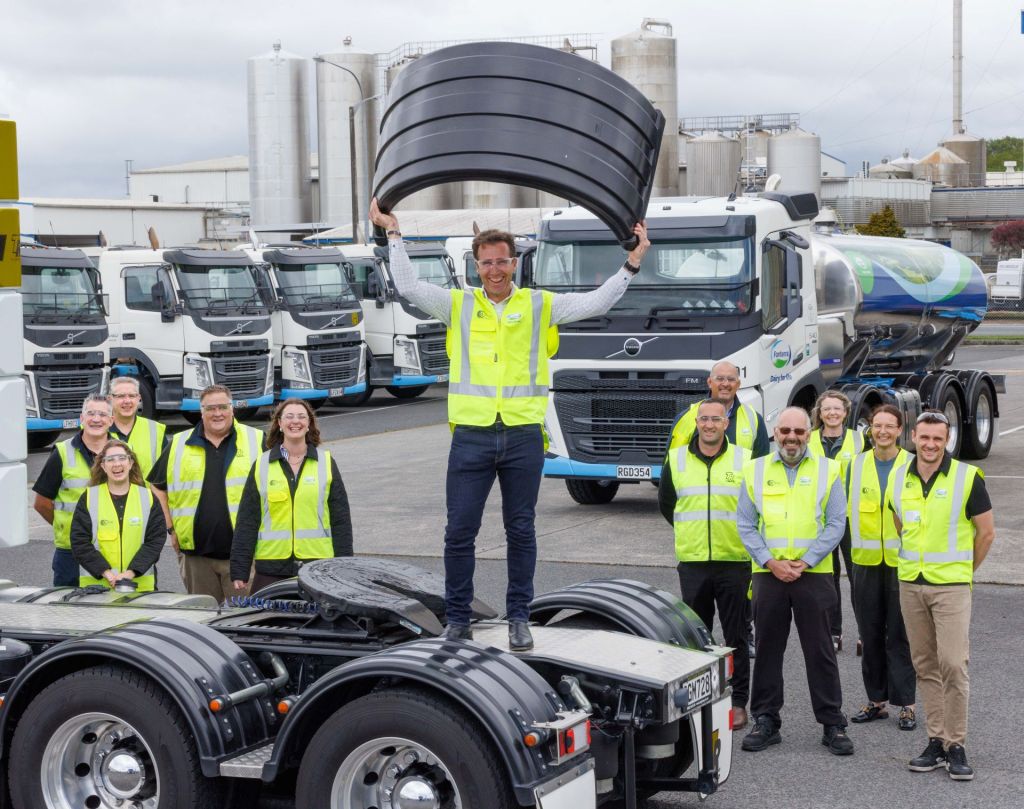
When it comes to recycling and reducing emissions, transport isn’t usually the first sector that comes to mind. But innovative manufacturer and HVIA member RHINO is helping change that, becoming the first known manufacturer of heavy-truck and trailer mudguards to obtain an independently verified carbon footprint for a mudguard.
The flagship black recycled-plastic guard has a 76 per cent lower carbon footprint than guards made from virgin plastic.
RHINO has been manufacturing truck mudguards and fittings for nearly 40 years. Over the past five years, the business has added a strong sustainability focus to its portfolio — leading to the development of guards made from recycled plastic.
The company recently achieved Toitū Envirocare verification, in accordance with ISO 14067:2018, confirming the significant 76 per cent carbon reduction figure.
RHINO General Manager, Will Samuel, pictured above with key staff and clients, says the milestone is a team effort, and has been achieved in collaboration with industry leaders Fonterra, Mainfreight, TR Group, TWL and Vision Plastics.
“On the face of it, you may not expect recycled mudguards to make a big difference in reducing carbon emissions — but every little bit helps,” he says.
“Large transport companies are now accounting for every kilogram of CO₂-e, while regulations in Australia, New Zealand and Europe require certain companies to report and, in some cases, reduce the carbon footprint of their trailers during manufacture.
“By creating recycled products that stand up to tough conditions — and by developing a recycling ecosystem — we can contribute to a meaningful reduction in carbon emissions across the sector. Now, we have the evidence and data to back it up.
“We hear talk of industry using recycled material, but we don’t see much evidence. RHINO is planning for a future where recycled products are the norm, not the exception. All RHINO plastic mudguards meet strict performance criteria and include a UV additive to resist colour fading.”


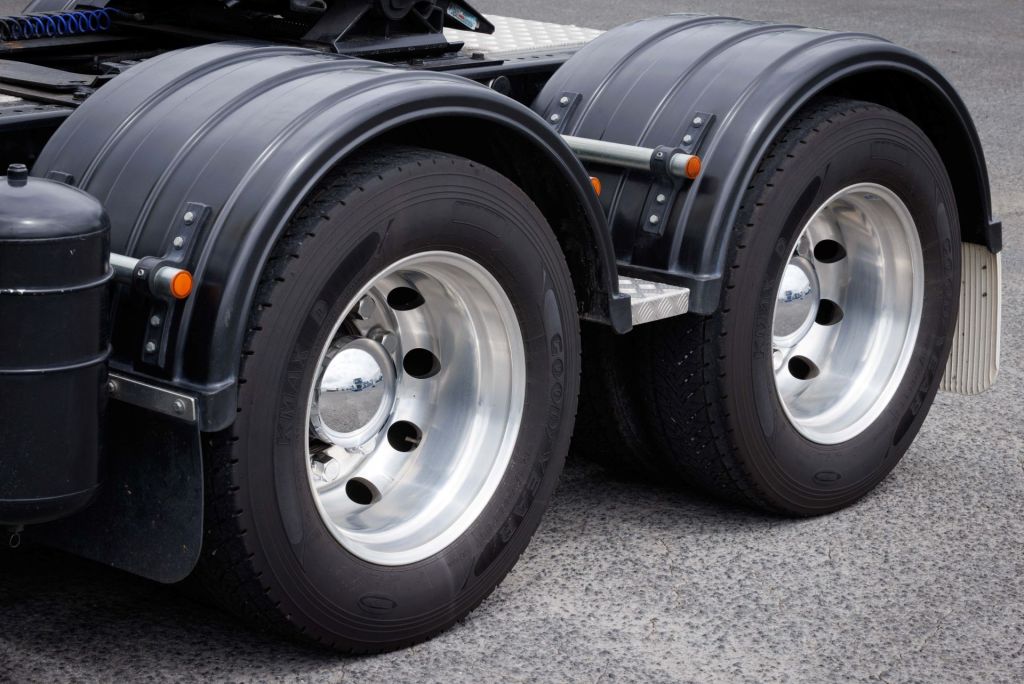
Top: Left – Shane O’Grady, TR Group National Sales & Marketing Manager; Centre – Jason Barrie, TR Group Sales & Account Manager; Right – Matthew Schwass, TR Group Rental Manager
RHINO began producing recycled truck mudguards in 2021 and has seen increasing demand as more fleets participate in recycling. The company undertook extensive modelling before undertaking the rigorous Toitū verification process.
“We’re a company grounded in our values. We believed we had the products, data and aspirations to meet the Toitū requirements. It took a great deal of time and effort, but we’ve got there — and we’re proud of the results,” Samuel says.
The lifecycle assessment follows a cradle-to-gate boundary, covering all stages from raw material extraction and processing through manufacturing and logistics. The verified carbon footprint includes delivery to New Zealand customers and, for Australia, to RHINO’s Melbourne warehouse.
RHINO has also launched a coloured guard range made from 50 per cent recycled plastic and 50 per cent virgin plastic, with an initial 13 per cent lower carbon footprint — and plans to improve that metric further.
The recycling initiative now extends across the ecosystem. Fonterra, TR Group and TWL are amongst a number of companies who return mudguards for recycling and use recycled guards.
“The sector is collectively making significant progress in this space,” Samuel says.
“Our sustainability efforts were inspired by Fonterra’s recycling initiatives. TR Group were the first to specify recycled mudguards, and TWL successfully piloted a collection system at branch level.
“At the end of the day, manufacturers and suppliers like us need to contribute to ESG, sustainability and carbon-reduction efforts across the sector. It’s simply the right thing to do — and we hope others will explore their own ways to make a difference.”