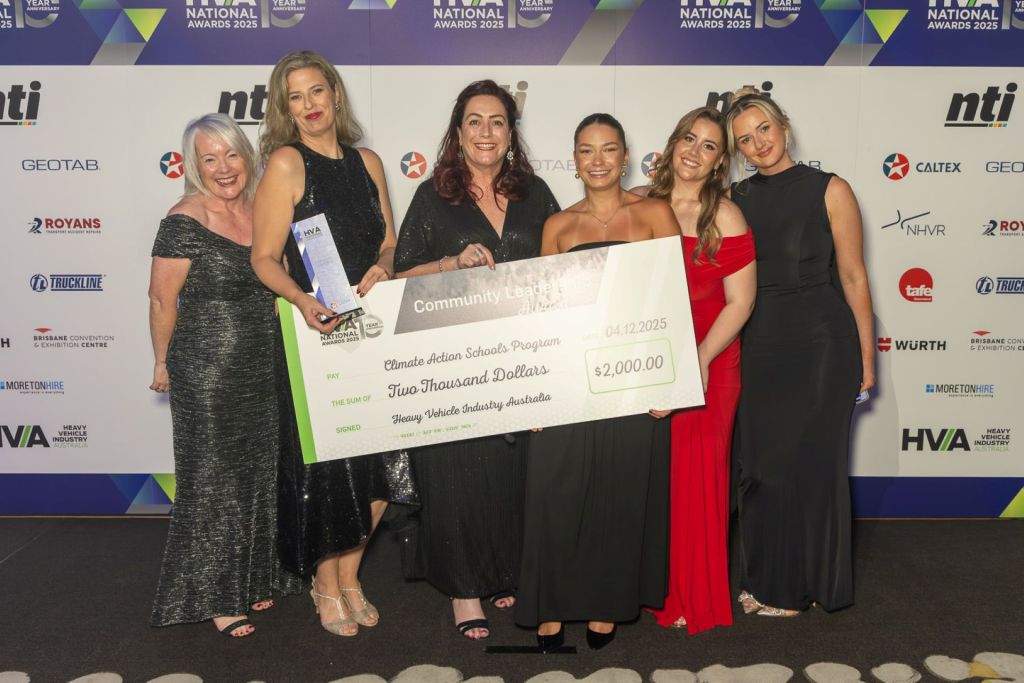
HVIA is showcasing the 2025 HVIA National Awards Community Leadership Award winner in the hope that it inspires others to act on this critical front – and for those that are already doing so, nominate for the upcoming 2026 awards program!
The award recognises HVIA member companies that have actively contributed to strengthening communities through meaningful, inclusive and strategic engagement. The team at Cummins South Pacific won the award (sponsored by Caltex) for its Climate Action Schools Program (CASP).
The award goes beyond traditional Corporate Social Responsibility (CSR) – it celebrates initiatives that create lasting value for people, places and industry reputation, whether through education, diversity, road safety, sustainability, partnerships, or in-kind support.
What is the Climate Action School Program?
The CASP provides the tools, coaching, community volunteers, and resources for schools to become a Climate Action School (CAS).
A CAS is committed to becoming more sustainable by diverting resources from landfill and joining the circular economy. It’s a system that doesn’t take extra time or effort, just a change of behaviour.
For anyone in the industry interested in learning more about the CASP, there is a dedicated website which is full of great information, resources and testimonials from participating schools.
“Twelve months in, we’re seeing resource recovery skyrocket, cultural maturity deepen, cost savings stack up – and students, teachers and leadership stepping forward as changemakers,” Cummins says.
“The CAS initiative was developed through a partnership spearheaded by Cummins’ foundational investment and commitment to ensuring what we do leads to a cleaner and safer environment.
“Its design was shaped through consultation with educators, leadership, students and industry partners, ensuring the curriculum is relevant and impactful.
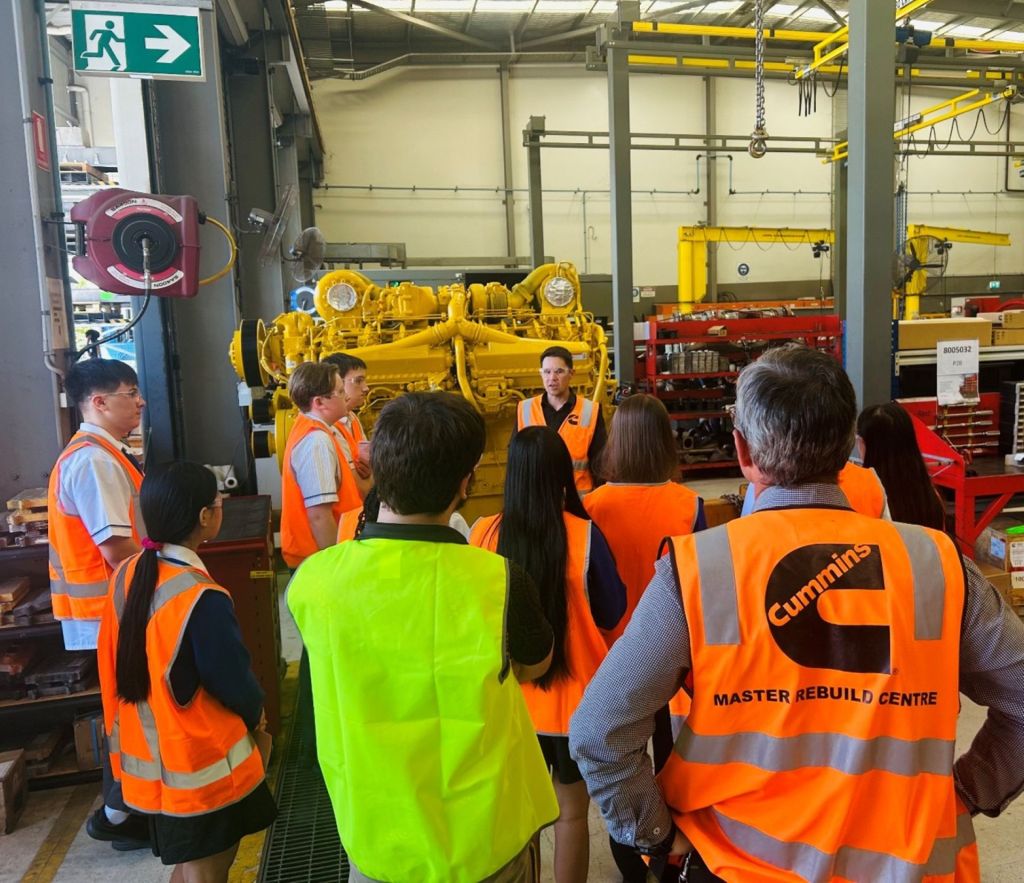
“Cummins hosts tours of our state-of-the-art Master Rebuild Centres (MRCs) in Brisbane, showcasing how sustainable practices are embedded in high-performance industrial operations.”
Extensive consultation ensured the initiative aligned with both educational needs and industry expectations, involving 19 Cummins employees contributing 60 volunteer hours so far through working bees, mentoring, and hosting tours at the MRC.
The CASP has achieved significant environmental outcomes, demonstrated primarily through the successful diversion of substantial volumes of student resources and waste from landfill at participating schools.
Woodridge State High School, for example, is currently diverting 76 per cent of resources from landfill.
Beyond these quantitative metrics, the program is fostering profound, lasting behavioural change, and raising cultural maturity.
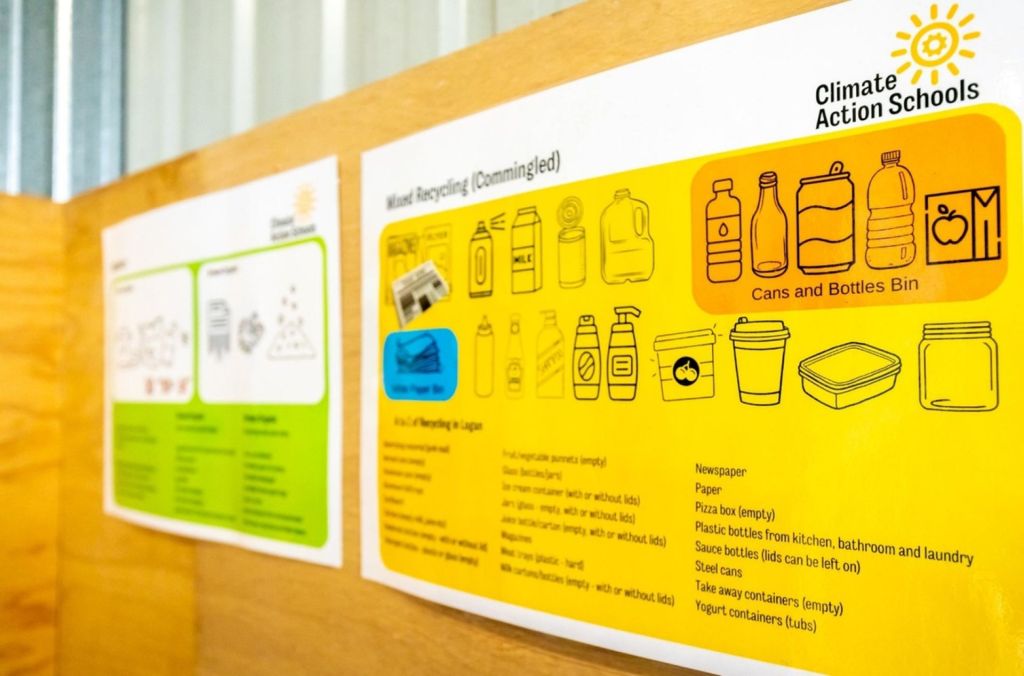
An example of this impact is students’ realisation of the devastating human cost of e-waste processing in other nations. This highlights that as a part of a privileged, educated nation, they will have the opportunity to be the next engineers, industrial designers or manufacturers, and they are empowered, resilient and world changing
This program is not just diverting waste, it’s developing a generation with the skills, mindset, and global awareness to drive sustainable change.
Judges were suitably impressed by the program, noting “The CAS program is clearly defined as an educational and community engagement model, with a strong focus on sustainability, waste reduction and circular economy principles”, and that Cummins has shown “Demonstrable leadership and a very strong link to both a local community and a sustainability outcome”.
The program’s impact is further highlighted by the recognition of passionate individuals like Ineke McGuire, a science teacher at Shailer Park State High School, who was nominated for a National School Teacher of the Year Award.
The program also cultivates lasting change by building a sustainability-first mindset in the students. Exposure to Cummins’ operational models in the MRC helps students understand how sustainability connects to industry practices, career pathways and pressing global issues.
In the regional pilot program, Woodridge State High School established its Sustainability Skills Centre (SSC) within the first four months after signing ‘The Pledge’. The data below highlights the following achievements in May 2025:
> Daily resource diversion: On average, 555 litres of recoverable resources are diverted from landfill each day, representing 53.3 per cent of the total material sorted daily in the SSC. In May 2025 – through continuous improvement – this is now on average 66 per cent and up to 75 per cent.
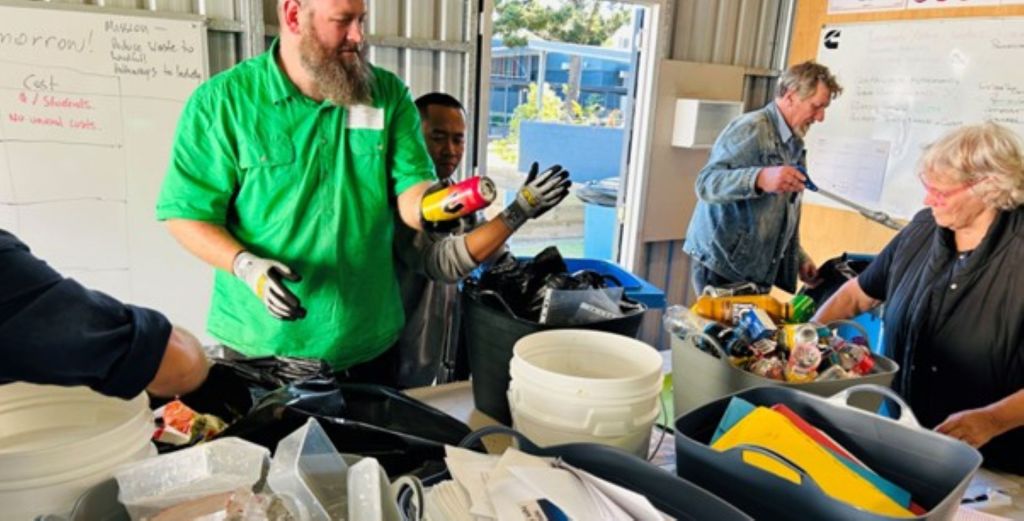
> 10c cans and bottles: Of the 555 litres diverted, 113 litres were 10c cans and bottles. The P&C and Scouts partner (50/50) and have now both received their second $600 circular economy income via Containers for Change scheme.
> Waste reduction: There was a 66 per cent reduction in the number of general waste bins each week and a 42 per cent reduction in the total number of bins requiring collection by August 2024. Through continuous improvement, this is now a 65 per cent reduction in student waste costs representing a $27,000 saving in 2025.
There is CAS resources available on the website now which could even be utilised to inspire members in workshops and facilities such as raising awareness of the “11 R’s of Sustainability”. We were shocked to find that there are 11 R’s and think this is a great one to put on the wall in any school or workplace for that matter!
In terms of scalability and the possibility of more industry driven programs like it, the Climate Action Schools model provides a clear, adaptable framework for implementation in diverse school environments, enabling widespread adoption and the creation of further working models of sustainability in practice.
Crucially, the core principles and practical tools taught – including LEAN methodologies, waste reduction strategies and structured problem-solving – are directly applicable and highly valuable within Cummins’ own operations, transferable to their customers’ businesses (particularly relevant for enhancing efficiency and sustainability in heavy vehicle maintenance and logistics), and hold significant potential for adoption across the wider heavy vehicle industry.
This initiative was so good, we were able to directly use some of Cummins’ submission answers to write this article. It ticked every box and went above and beyond what would be expected of industry in terms of community engagement and sustainability efforts.
HVIA is excited to see what other community-based programs our industry is cooking up in 2026. Look out for the opening of nominations for the 2026 HVIA National Awards in a few short months. In the meantime, stay tuned for next week’s article on another of our outstanding 2025 winners.
A special mention to the other finalists in this category in PACCAR Australia (Healthy Heads in Trucks & Sheds), Penske Australia & New Zealand (DXC’s Digital Futures Program) and Volvo Group Australia (Foodbank NSW & ACT). These were all great community initiatives for which our industry should be proud.