
Volvo’s Safety Zones geofencing service is now available in Australia, offering fleet operators the ability to manage vehicle speed in high-risk environments.
The heavy vehicle landscape is undergoing a digital transformation, as trucks become increasingly connected vehicles, and Volvo Trucks Australia is leading the way with the recent local launch of its Safety Zones service.
Geofencing is a simple concept, allowing a vehicle’s speed to be limited within pre-defined areas to keep drivers safer, less stressed and compliant out on the road. Think of the Safe Zones like digital guardrails, offering an invisible layer of protection.
Volvo originally developed the futuristic technology for use across its bus models, which operate in dense urban environments where speed was found to be the greatest contributing factor to accidents.
Now, the technology has now been adapted for use in trucks, offering a sophisticated layer of protection by creating virtual perimeters that automatically regulate vehicle speed using GPS and cloud-connected mapping.
The geofencing service allows fleet managers to designate high-risk areas and set custom speed limits starting from 20km/h, using a digital map to manage up to 300 geofenced zones per truck. These could include areas like city centres, school zones or depots.
It works in conjunction with Volvo’s Connect Positioning service, which provides real-time tracking and route analysis. This means fleet managers will receive feedback on where drivers are encountering risks, which in turn informs where new geofences should be placed.
While the technology provides automated intervention by restricting acceleration and applying the brakes to meet designated speed limits, the system aims to be supportive rather than invasive.
Drivers can still override the speed limit at any time by simply using the accelerator’s kick-down button, ensuring they have the power to react to immediate road hazards.
“The aim of the service is to make the traffic environment safer and to reduce stress for the driver,” says Volvo Trucks Product Manager, Johan Rundberg. “Geofences are mostly about information, and knowledge: allowing people to make informed decisions.”
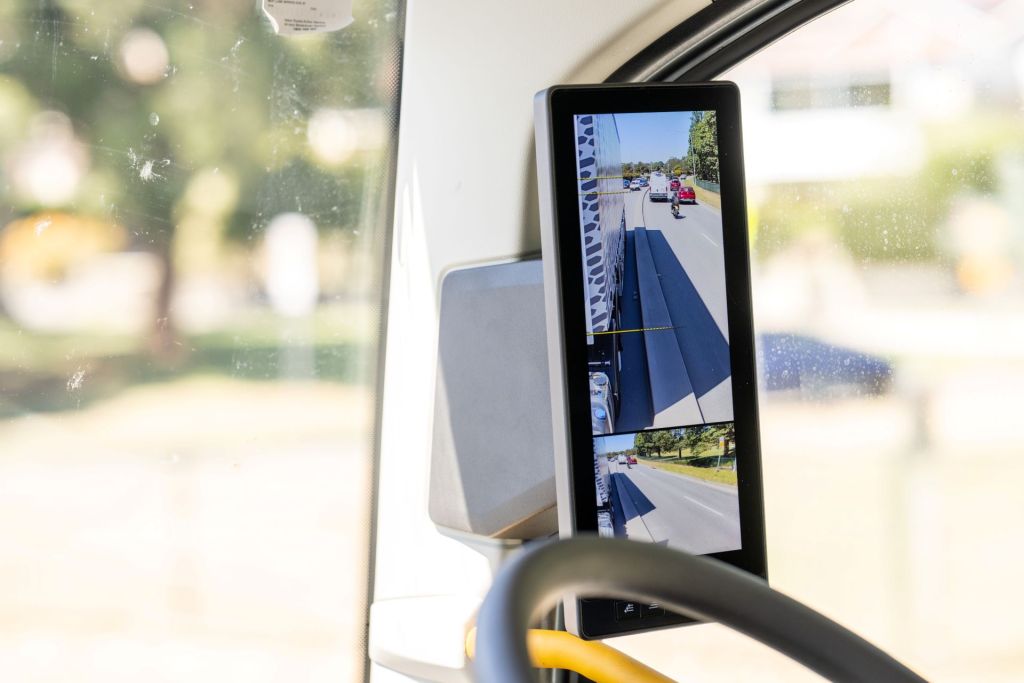
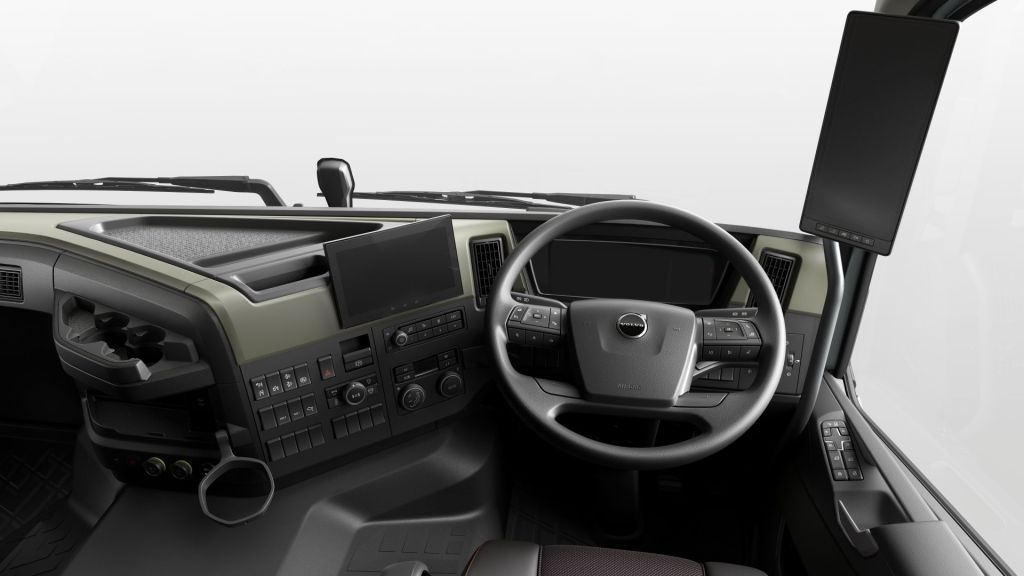

Volvo’s Safety Zones geofencing service offers fleet operators the ability to manage vehicle speed in high-risk environments
Safety Zones is integrated into the Volvo Connect digital suite and is compatible with heavy-duty FH, FM and FMX models – including the brand’s expanding range of electric trucks.
This service isn’t limited to new trucks either, with Volvo able to turn the system on in existing customer trucks, provided they’re less than around five years old.
Volvo offers Safe Zones for $12 per month, but it can also be bundled in with existing service agreements.
Safe Zones In Action
HVIA recently trialled the system in a Volvo FM 11 semi-trailer, traveling from Volvo’s headquarters in Wacol to the Port of Brisbane through various geofenced zones.
The experience highlighted the system’s set-and-forget simplicity. As the truck entered a pre-established 30km/h geofence zone, the truck slowed naturally, maintaining its speed with a dash alert to notify us we were in a safe zone.
Later, the system again limited the truck’s speed as we passed roadworks, this time maintaining 60km/h until we were past the reduced-speed zone.
We’ve all had to question a speed limit at one time or another. Was it 50km/h, or 60km/h along this road? If it was easy to get it right 100 per cent of the time, police would leave truck drivers to their own devices.
Volvo’s Safe Zones service takes the guesswork out of compliance for drivers and fleet operators, like having a watchful passenger onboard to remind you of a speed limit change. When you’re tired, or don’t know an area well, it’s a game changer.
As the heavy vehicle industry continues to embrace new technologies, the Safety Zones solution is a refreshing reminder that the future of trucking isn’t getting trucks to drive themselves, but about using smart technology to keep drivers safer and more supported.