
ROADBOSS’s Cobey Bartels gets behind the wheel of Isuzu’s all-new N and F Series models to see if the Japanese market leader has done enough to retain its crown for a 37th year.
There’s a certain weight to the Isuzu badge in Australia, because no other brand has managed to get anywhere near the Japanese market leader for a very long time.
For the past 36 years, Isuzu has dominated the light-duty market, and for much of that time it’s topped the medium-duty segment too, which is why a ground-up redesign represents a big risk. Can the truck maker stay on top?
Well, after a phenomenal 17-year run with the outgoing platform Isuzu Australia Limited (IAL) pulled the covers off its most significant update in nearly two decades, showing the models off for the first time at this year’s Brisbane Truck Show. Now, they’ve thrown us the keys.
We headed to Victoria’s Surf Coast to put the new metal through its paces, sampling the top-of-the-tree N Series and a range of FV and FX models across a couple of days. Before we get into how they drive, let’s talk about what’s new.
Ground-Up Redesign
At the heart of the new models is the Isuzu Modular Architecture and Component Standard (I-MACS), which is engineering speak for a new modular architecture that allows Isuzu to fit a range of Euro 6 engines, gearboxes and safety systems into its new lineup.
Both the N and F Series ranges have been updated to meet the new ADR 80/04 (Euro 6) emissions standards, but Isuzu hasn’t just bolted on an after-treatment system and called it a day. It’s used this as an opportunity to modernise the trucks from the ground up.
Safety is a serious focus across the MY25 lineup, with 12 active and passive safety systems as standard in the F Series, and 15 active and passive safety systems in the N Series, powered by advanced stereo cameras and radars.
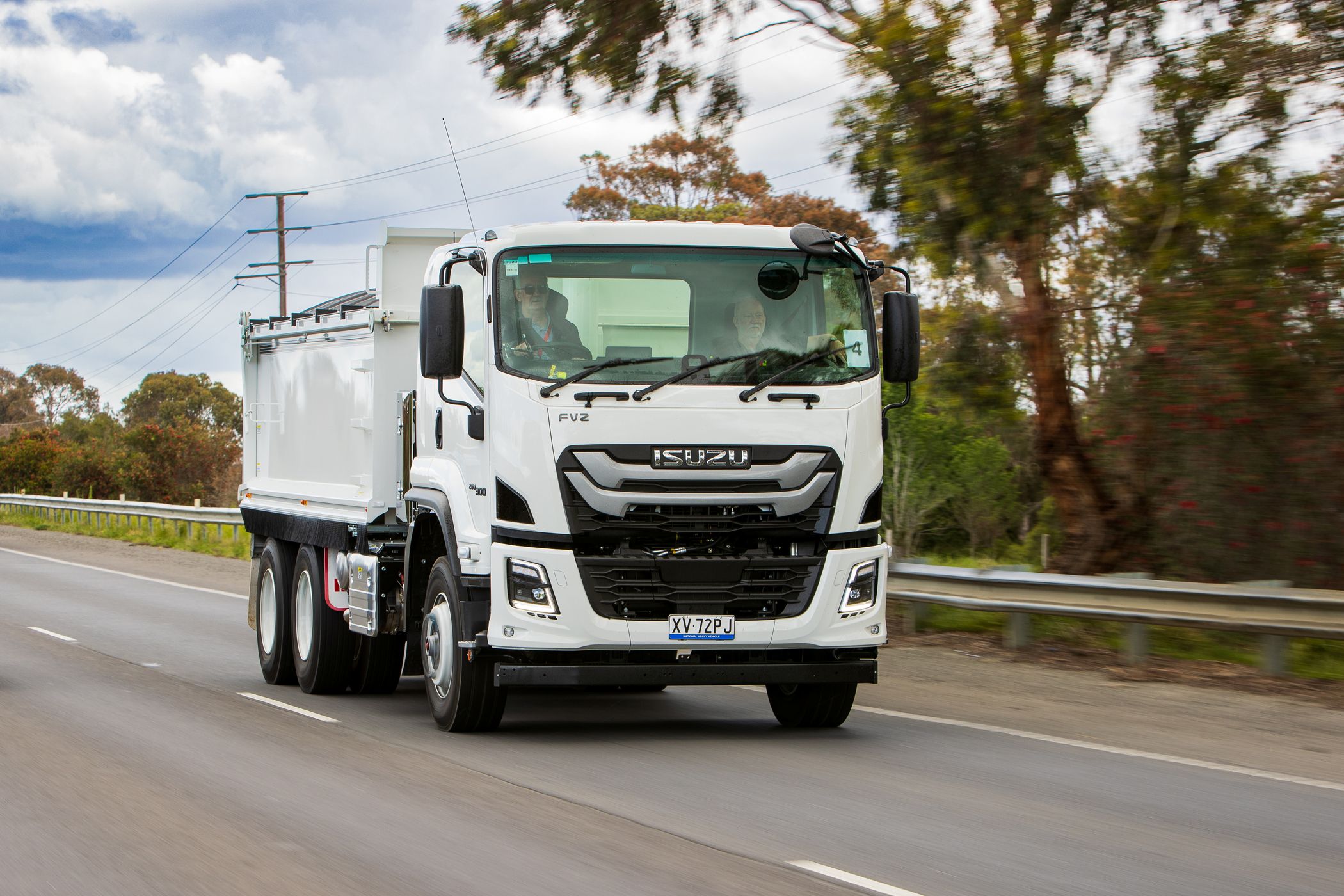
Both the N and F Series ranges have been updated to meet the new ADR 80/04 (Euro 6) emissions standards
These safety systems are commonplace in passenger cars, but they’ve been making their way into trucks over the past few years. Consider these systems a second set of eyes, because they aren’t overly intrusive but will step in to save you if required.
Things like lane-keep assist (only available in the F Series), lane departure warning, adaptive cruise down to 0km/h, advanced emergency braking, attention assist warning, and intelligent speed limiter really do make these trucks safer and simpler to operate than ever before.
Making them easier to operate is clearly a key focus, evidenced by tweaks like a smaller, more upright steering wheel in the N Series and a smart adaptive steering system in the F Series, which also scores disc brakes all round and EBS for a more consistent brake feel.
Let’s face it, the skilled driver shortage isn’t getting any better, so why not make trucks simpler, safer and more comfortable to be in? It just makes sense.
Visually, the new Isuzu N and F Series models are sharper, with bi-LED headlights and daytime running lamps that give them a modern, commanding road presence. Make no mistake, though, they’re still recognisable out on the road and will blend right in to a fleet of the last-generation models.
But the real story is inside, where the cabins have been transformed from a basic workspace into a comfortable office for operators. Big trucks get fancy, tech-rich interiors, but medium- and light-duty trucks are often fairly bare bones. Not these ones.
The N Series has an improved seat position, which alongside the smaller diameter steering wheel makes it feel more like a ute than a truck. Meanwhile, the F Series gets a fancy ISRI air seat with built-in ventilation, and all the infotainment tech you’d expect in an SUV.
Both the N and F Series models get a 10.1-inch infotainment touchscreen, plus a seven-inch digital display between the analogue dials that offers additional safety and drive data like the speed limit (a very handy feature).
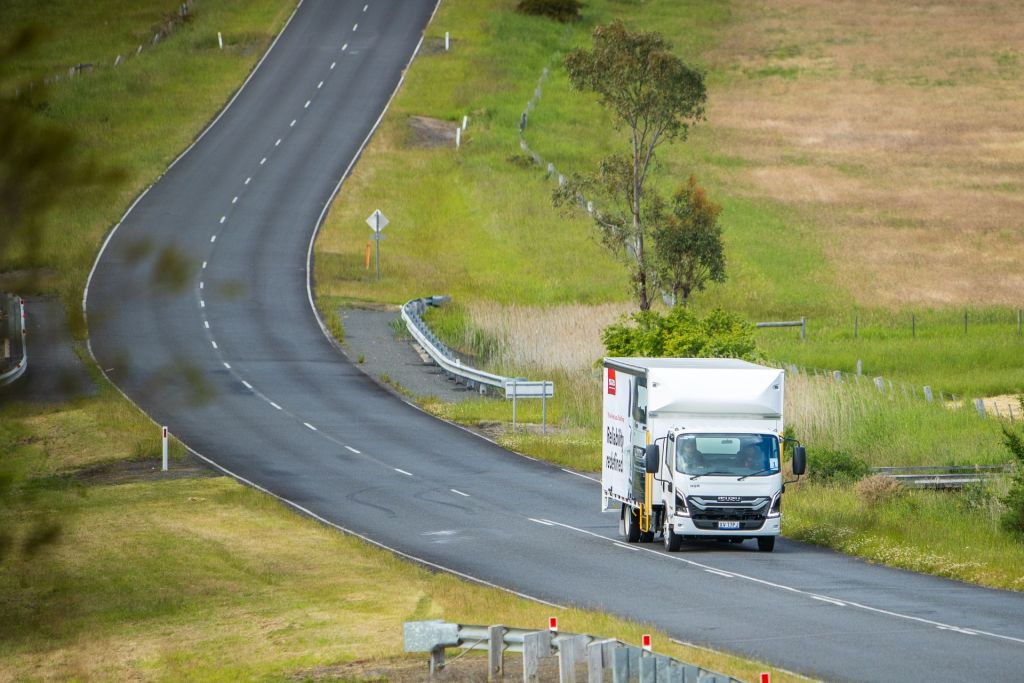
The new models are sharper, with bi-LED headlights and daytime running lamps that give them a modern look
While the range-wide improvements are impressive, it doesn’t end there, with both the N and F Series models scoring a myriad of other unique updates.
City Slicker
While we had a steer of the smaller NLR car-licence N Series model back in April, in pre-production form, it was the larger 8.8-tonne NQR that was first to hit the market and that’s the model we were thrown the keys to.
The NQR 88-190 sits at the top of the N Series lineup with an 8,800kg GVM (up 100kg on the outgoing NQR), and we tested the Freightpack prototype offering a factory-fitted eight-pallet curtainside body.
Inside, the driving position has been improved, with the car-like seat and steering wheel ergonomics, but the dash is also lower for improved forward visibility. In a city truck, there’s no such thing as too much visibility, so these are welcomed updates.
Power comes from the proven 5.2-litre 4HK1-TCC turbo-diesel engine, now breathing cleaner thanks to an AdBlue-sipping SCR system, punching out 140kW of power and 513Nm of torque.
While the smaller three-litre engine-equipped N Series models get a new sharp-shifting nine-speed dual-clutch AMT, the larger NQR sticks with the carryover six-speed AMT – but it’s also been sharpened up with revised software.
We’re eager to spend more time with the three-litre models, because that nine-speed was impressive during our brief pre-production test, but Isuzu hadn’t launched the smaller models to the public at the time of testing.
Medium-Duty Muscle
Stepping up to the F Series, even more has changed with new engine options and a completely reimagined cabin.
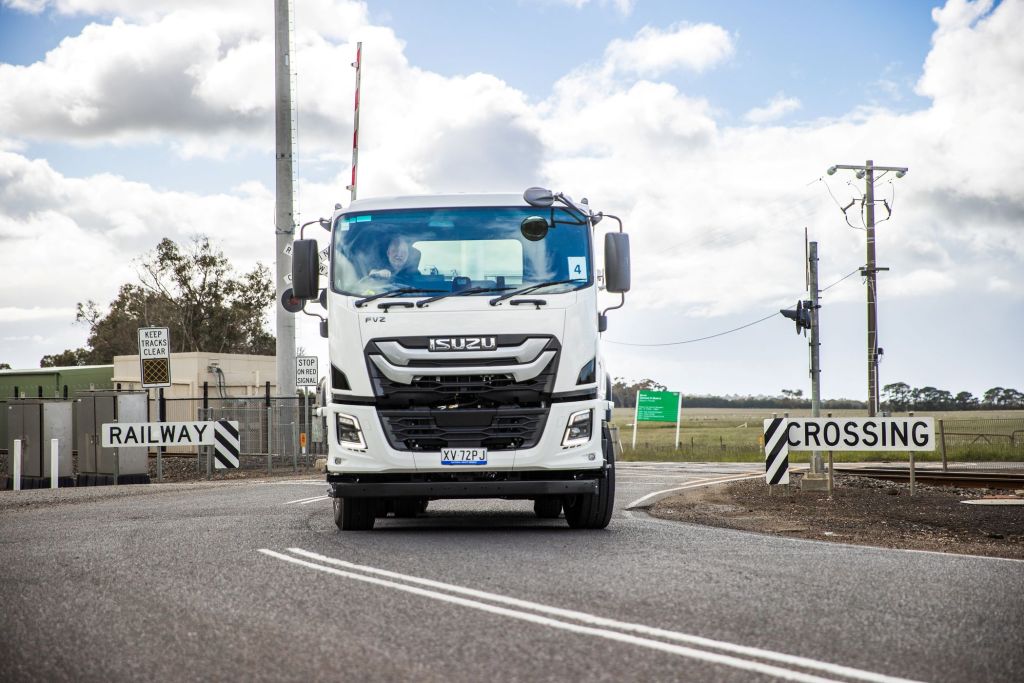
The F Series has changed even more with new engine options and a completely reimagined cabin
The headline is the new DB6A-TCC is a 6.7-litre six-cylinder engine co-developed with Cummins but built at Isuzu’s Tochigi engine factory in Japan. It churns out 221kW/984Nm in its top state of tune, with a 191kW option also offered.
Isuzu only offers the new DB6A with an Allison 3500 Gen 6 six-speed automatic transmission, which is a combination that just works. This engine and gearbox combination, albeit wearing a different badge, is a proven combination.
Smaller F Series models are still offered with a four-cylinder engine producing 177kW, with the option of a six-speed manual or six-speed automated manual gearbox, and larger FX models use the brand’s 9.8-litre engine producing 259kW and 1437Nm, backed by an Allison 4430 Gen 6 six-speed automatic.
These options both work well, but it’s the new 6.7-litre engine that got us excited. A Cummins-derived engine in a Japanese medium-duty truck? Yes please.
Stepping up into the cabin, it’s a massive improvement over the outgoing models – which were fine, mind you, but nowhere near as swanky. A new ISRI air seat with integrated ventilation ups the comfort, while offering loads of adjustability. It’s an office you’d be happy to spend 12 hours a day in, at least I was.
On The Road
Driving out of Isuzu’s Truganina HQ, bound for Torquay on the south coast of Victoria, I’d planned to leapfrog between N and F Series models. Ultimately, I spent most of my time in the NQR 88-190 Freightpack and FVL 260-300 Freightpack – both practical ready-to-work models that showcase the best of what each new lineup offers.
In the NQR 88-190, the car-like driving experience is noticeable from the moment you jump into the driver’s seat. The revised steering feels connected and direct, due to that smaller diameter wheel but also likely a result of finessed front suspension.
The 5.2-litre engine is a torquey beast, with peak pull arriving at just 1,600rpm, so it never feels strained or overworked. The AMT is a smooth operator too, pre-empting shifts and holding gears better than it did in the outgoing models.
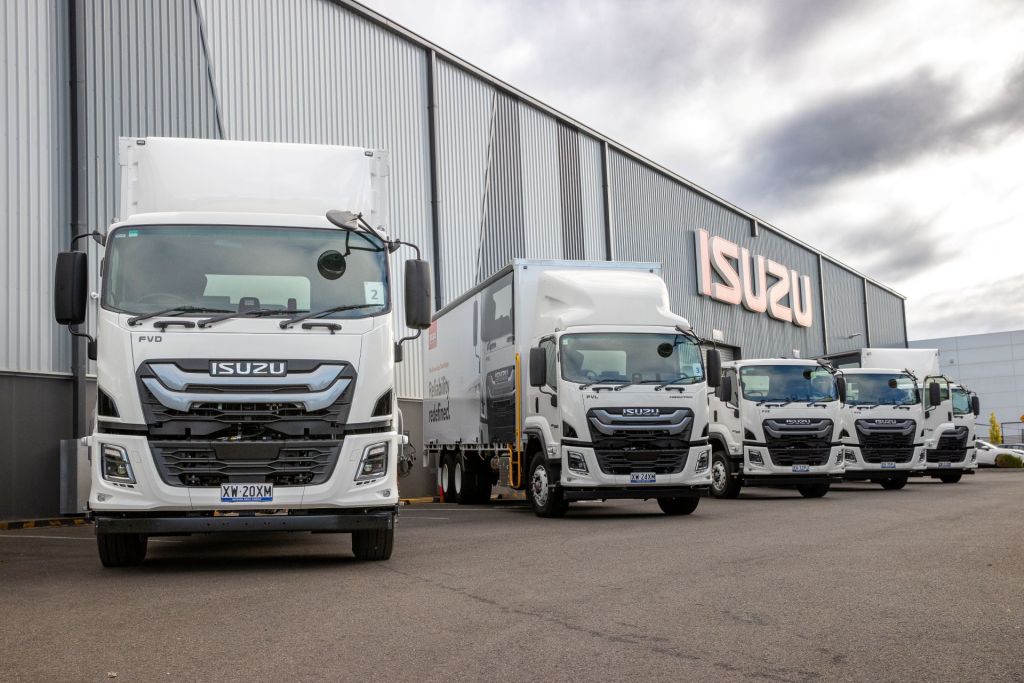
After a 17-year run with the outgoing platform Isuzu has pulled the covers off its most significant update
The active safety features, often acting more like an annoying backseat driver in modern passenger cars, is like having an alert passenger to keep an eye on the road in these models. It isn’t invasive at all. The distance warning system is a game-changer in traffic, giving you a digital readout of the gap to the car in front, which I used to match the flow of traffic around town and out on the highway too.
Stepping up into the FVL 260-300, the Cummins six-cylinder is buttery smooth, and beyond a pleasant hum it’s impressively quiet – even when operating at around 70 per cent of the truck’s 26-tonne GVM through the hills outside of Geelong. The Allison auto helps this engine shine, keeping the Cummins in its happy place up and down the gears.
The Allison is particularly impressive when slowing down in the FVL, as it keeps the grunty engine brake working at its best. The engine and gearbox symbiosis is impressive, which is likely the result of a fair bit of local tuning on Isuzu’s behalf. It’s as if they were made for each other.
Ride quality from the Hendrickson airbag rear end is plush, soaking up the imperfections of the B-roads with composure. What bumps do make their way into the cab are mellowed out by the ISRI seat, making this the most comfortable F Series I’ve ever spent time in, by far.
Both the N and F Series had one character trait in common, I discovered, and that’s how car-like they are to operate. Maybe car-like isn’t the right way to put it, perhaps they’re just easier than ever to drive.
In any case, this is a good thing in our eyes, given how little experience many of the people operating these trucks will have. Isuzu are doing their bit to help with the skilled driver shortage, even if they didn’t set out to do it.
No Sign Of Complacency
Isuzu Trucks didn’t need to redesign the N and F Series from the ground up to stay on top, but they did it anyway.
The truck maker’s new models are better in every conceivable way, without losing sight of what made them so successful in the first place: rugged build quality and a get-it-done attitude. They’re safer, more comfortable, and cleaner than ever before, but they still feel like an Isuzu truck always has. A big risk for market leaders is complacency, but that’s clearly not a problem at Isuzu.