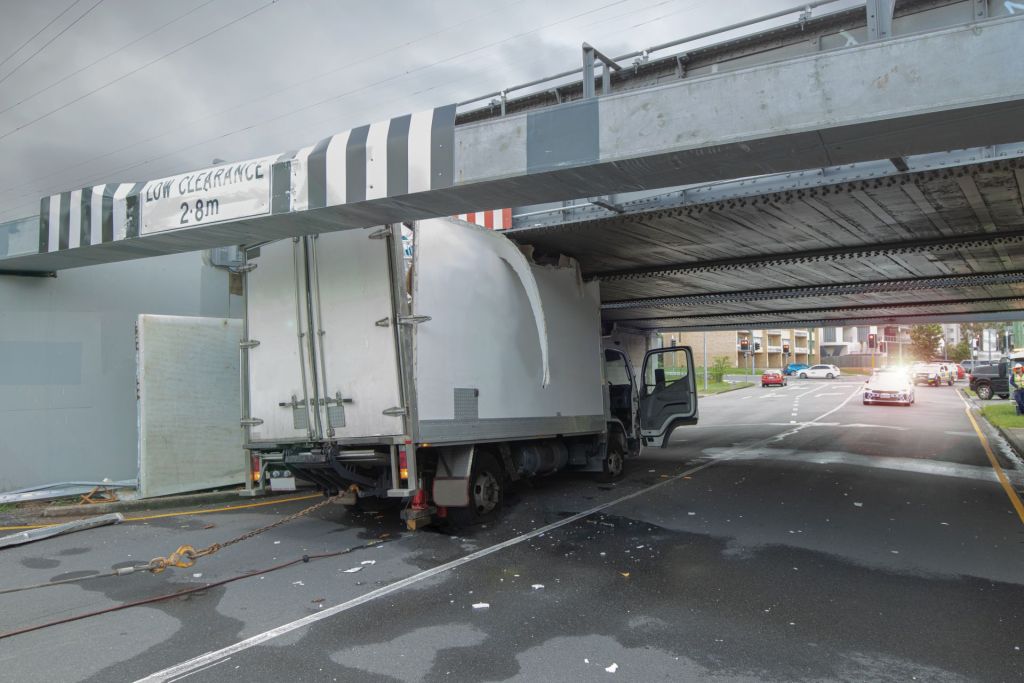
Vehicle bridge strikes cost the Australian economy an estimated $101 million in financial year 2024-25, according to a new report released this week by HERE Technologies and the Australian Logistics Council (ALC).
Based on research conducted by HoustonKemp, an economic consulting firm specialising in quantitative analysis and public policy, the study provides the first comprehensive assessment of the economic cost of bridge strikes in Australia, addressing a longstanding gap in national data and highlighting the growing impact of bridge strikes on transport networks, supply chains and communities.
Bridge strikes, where vehicles collide with bridges or other overhead structures due to height incompatibility, are a persistent and increasingly frequent issue across Australia’s road network.
The report estimates that approximately 1,220 incidents occurred in FY2025, with figures rising by around 38 per cent since 2018 and expected to continue increasing alongside freight growth.
A Systemic Issue With Economy-Wide Impact
Beyond physical damage to infrastructure, bridge strikes create widespread disruption across the transport ecosystem.
Notably, the impact extends beyond those directly involved in incidents. The study shows more than 40 per cent of costs are borne by the broader community, primarily through rail delay, congestion and emergency response.
“Bridge strikes are often perceived as isolated events, but our findings show they are a systemic issue with far-reaching economic and societal consequences,” says Daniel Antonello, General Manager, Oceania, HERE Technologies. “As freight volumes continue to grow, so too will the cost of inaction.”
The economic impact also varies across states. New South Wales contributes the largest share of total costs (34 per cent), followed by Queensland (32 per cent) and Victoria (29 per cent). Despite accounting for a smaller share of total incidents, Victoria incurs a disproportionately higher share of costs, driven by a greater concentration of more severe bridge strikes.
Rising Freight Demand Driving Future Risk
The concentration of low-clearance infrastructure in urban areas, combined with increasing freight activity, is amplifying the risk of bridge strikes. The report highlights that 97 per cent of incidents occur along Australia’s east coast, reflecting the concentration of freight activity and height-restricted infrastructure in major urban corridors.
Despite many incidents being relatively low in severity, their frequency drives significant cumulative costs. The study finds that the weighted average cost per incident is approximately $82,500, with a catastrophic event exceeding $6 million.
Notably, lower-severity protection beam strikes — where vehicles hit protective structures installed ahead of bridges — accounting for more than half (54 per cent) of total costs due to their high frequency.
Looking ahead, total economic costs are projected to reach $869 million in net present value terms over the next 10 years, reinforcing the need for more effective prevention strategies.
Unlocking The Value Of Prevention
These robust, data-driven insights into the economic impact of bridge strikes are critical to informing smarter, more targeted investments, says Dr Hermione Parsons, CEO at Australian Logistics Council.
“Bridge strikes don’t just damage infrastructure – they disrupt supply chains, delay deliveries and impact productivity across the freight sector. Understanding the true cost of these incidents is an important step toward prioritising solutions that improve safety and keep goods moving efficiently across Australia,” she says.
The findings reinforce that bridge strikes are largely preventable. While governments and infrastructure operators have invested in measures such as warning signage and height detection systems, incidents continue to occur, highlighting the need for more effective and proactive solutions.
Technologies such as in-vehicle height warning systems and advanced route planning solutions can play a critical role by helping drivers avoid low-clearance structures and real-time road restrictions before they are encountered.