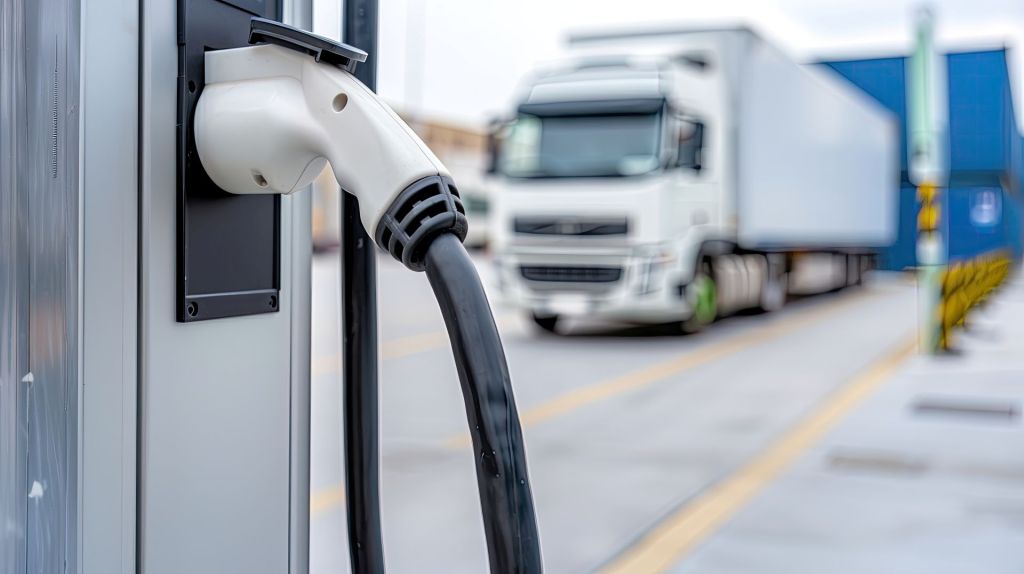
HVIA’s technical working group program delivered a key milestone last week, with the release of its guideline for on-road trials of powered trailers.
The guideline – available here – was drafted across 2024 and 2025, and recently went through consultation with external stakeholders including vehicle standards and road safety professionals from all states and territories, the Federal Department of Infrastructure, the National Heavy Vehicle Regulator, and other industry associations.
“Subjecting the guide to wide consultation was an important step, as it means that all road managers and regulators have had the opportunity to read it and provide comments, and are now primed for access/permit discussions with industry,” Adam Ritzinger, HVIA’s Chief Technical Officer and leader of HVIA’s Powered Trailer Working Group, says.
“I’m incredibly proud of the work that HVIA members have collectively achieved with this guide, and it’s been a privilege to lead the group to this outcome.
“Every available road freight decarbonisation technology must be afforded the chance to demonstrate its potential contribution, and this guideline can facilitate that.”
The guideline will be emailed directly to the external stakeholder group shortly, and will also be made available for download on HVIA’s website.
Other technical matters relevant to the guide’s information were the focus of discussions in European working groups throughout the second half of 2025. Those discussions took place in the meetings of the Working Party on Automated/Autonomous and Connected Vehicles (referred to as the ‘GRVA’). The GRVA deals with safety provisions related to the dynamics of vehicles (braking, steering), Advanced Driver Assistance Systems (ADAS), automated driving systems and as cyber security provisions.
That group has proposed a limit of the regenerative braking force developed by powered axles of 20kW, revisions to the ISO 11992-2 standard to enable more robust truck-trailer communications, and the need to consider cyber security risks.
HVIA took the time to discuss those developments with representatives from the Department of Infrastructure and the NHVR, and encouragingly, both believed local trials can continue while that development work is completed.
Discussions with local regulators then moved to regulatory pathways for eventual on-road trials, with two options becoming apparent: a newly-built powered trailer would be subject to the Australian Design Rules (ADRs), administered by the Department, but an existing, registered vehicle that is modified to become a powered trailer would instead need to have its modifications approved by the NHVR, which is allowed under provisions within the Heavy Vehicle National Law (HVNL).
“I strongly encourage all HVIA members considering a trial to read the guideline in full, as it now includes the items raised by the GRVA, and consider how their systems will manage the risks, and also their options for regulatory pathways,” Adam says.
All enquiries regarding powered trailer technology and HVIA’s Powered Trailers Working Group can be directed to a.ritzinger@hvia.asn.au.