
The Australian Government has released its draft ‘Best Practice Guide’ on the adoption of AI in the workplace and opened it for public consultation. The voluntary guide covers how employers can plan for AI, build skills and involve workers as they introduce new tools.
The Australian Chamber of Commerce and Industry (ACCI), the national peak body representing state and territory chambers of commerce and national industry associations, welcomed the draft’s practical examples and focus on building capability. However, it raised concerns about how the guide describes consultation.
ACCI wants the final version to spell out where existing legal obligations apply and give employers room to assess low-risk tools before committing to an investment.
“Employers must be able to trial tools, respond to competitors and adopt technology quickly, especially where the tool is a software update or a low-risk productivity aid,” ACCI Chief Executive Andrew McKellar says.
For business leaders, the question is what a trial can tell them about whether an AI investment will pay off.
“Turning AI into ROI for a lot of CEOs is tough, and it’s not clearly happening,” CSIRO’s Dr Stefan Hajkowicz told HVIA’s Executive Club.
It’s a question many heavy vehicle businesses are already facing. In HVIA’s 2026 Industry Leaders Survey, 85 per cent of responding companies said they were using AI or actively exploring it.
At the Executive Club, Hajkowicz used an illustrative trailer job to show where AI might save time or improve the work, from the first quote through to years of service. He also pointed to applications that would need better data or more investment.
Read HVIA’s feature, AI Moves From Hype To Hard Questions
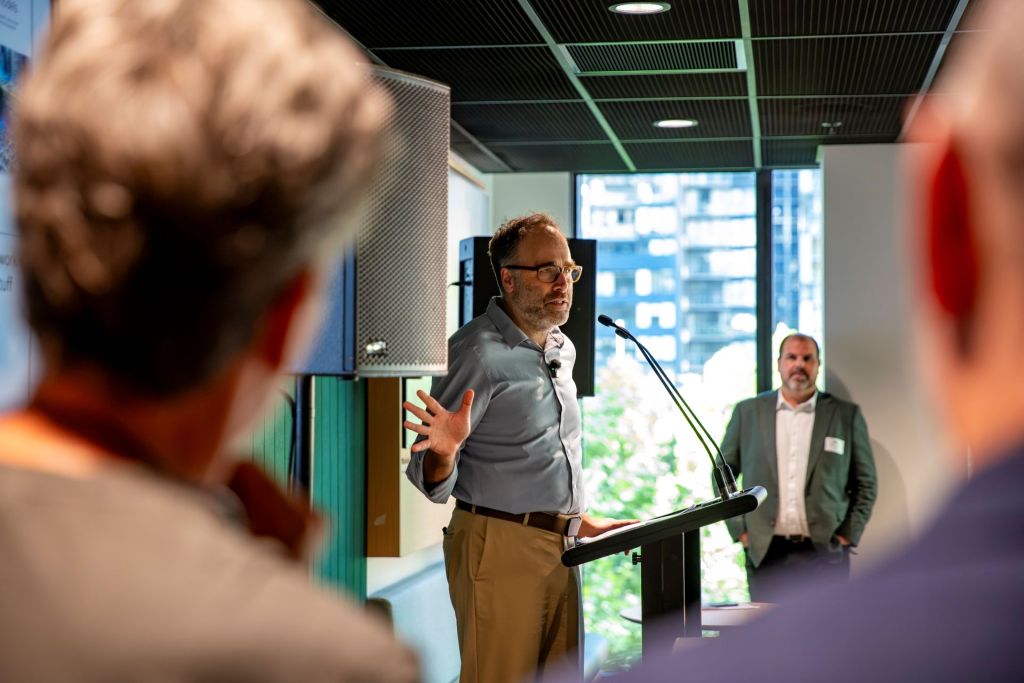
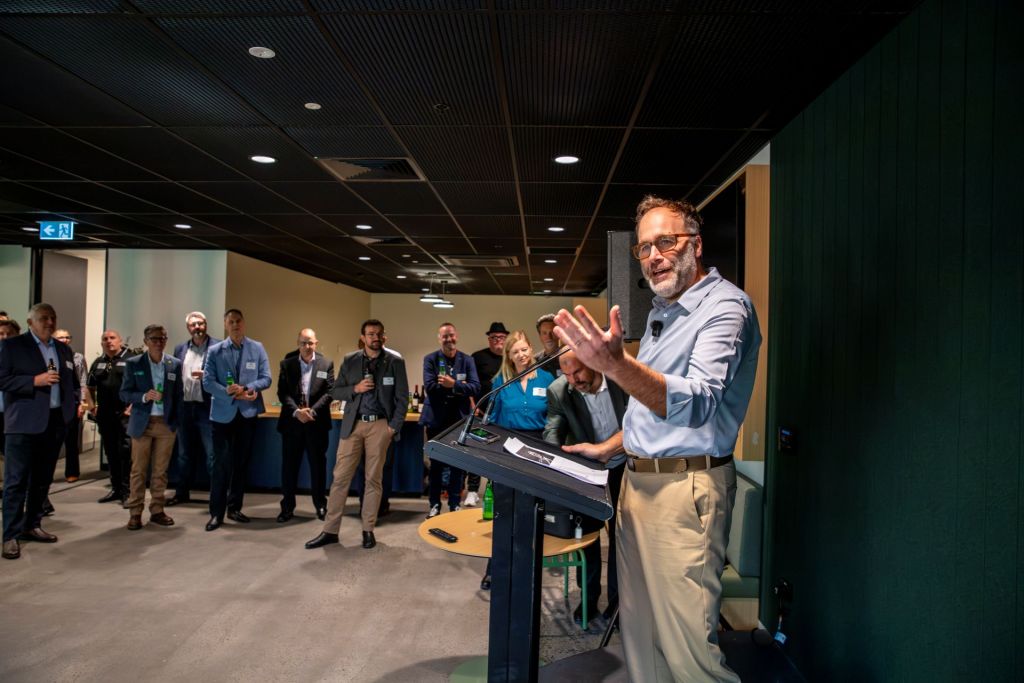
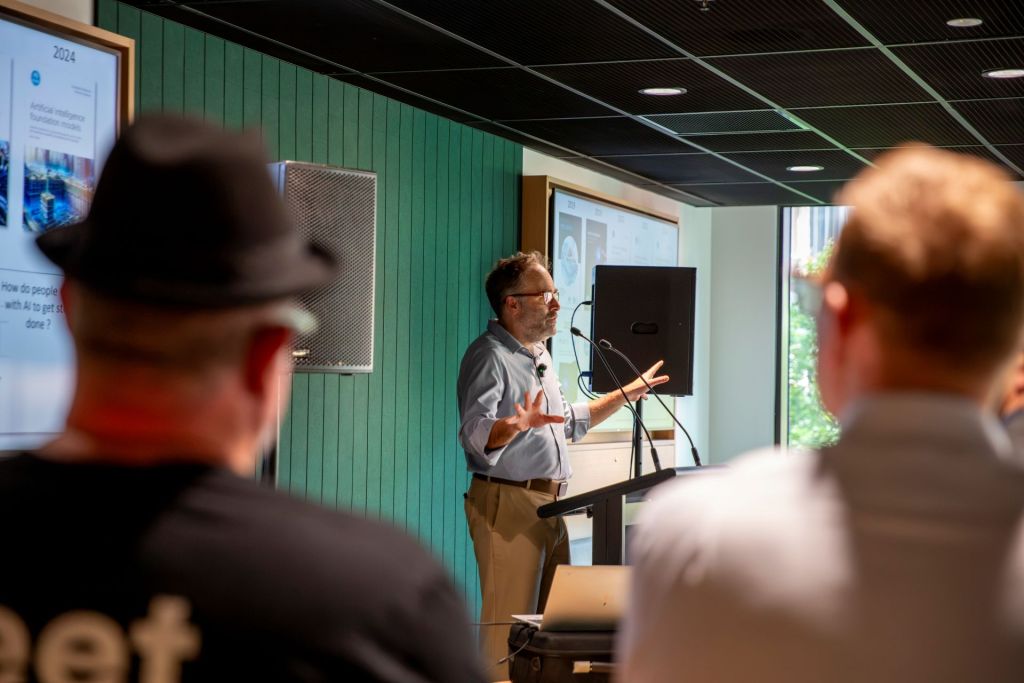
Speaking at HVIA’s Executive Club, CSIRO’s Dr Stefan Hajkowicz said turning AI into ROI for a lot of CEOs is tough
Start With What Your Business Already Knows
A practical first step is to find out where staff are already using AI and what they’re trying to get done. Bringing that use under the business’s oversight gives managers and staff a basis for deciding which tools to use, what information can go into them and who checks the output.
Hajkowicz showed how teams could start with documents they already have, such as service manuals and parts catalogues. Applications such as predictive maintenance draw on operational data, including telematics and service history, and can require more investment.
Much of what a business knows also sits with its people. Experienced engineers and tradespeople know which details matter, where to check an answer and what an apprentice needs to understand. AI can help teams document and share that knowledge, with qualified people reviewing the work and signing off where required.
Measure The Work Before And After
Hajkowicz’s advice was to choose one workflow, measure the effort it takes today, protect the data and compare the time and quality of the result.
A workshop could test whether a business-managed AI tool can turn de-identified job cards into useful draft handover notes. The technicians and other staff who use the notes can help design the trial and judge whether the handover is clearer.
To assess the return, count the time spent checking and correcting the drafts, the cost of the tool and any training staff need.
Through the Industry Leaders Survey and the Executive Club, HVIA is finding out where members are getting stuck and sharing examples of how AI could help their teams. Members can watch Hajkowicz’s full address and explore further material through HVIA Training.
Read the Government’s draft guide and have your say. Submissions close at 11:59pm AEDT on January 27, 2027.