
When a group of Monash University Art, Design and Architecture (MADA) students climbed into the cab of a Toll Group truck last week, they weren’t just ticking off a field trip. They were stepping into the first stage of a brief that asks them to do something genuinely difficult: redesign how Australia sees the people who drive its trucks.
Coordinated through the National Road Safety Partnership Program (NRSPP), Toll Group brought a one-month-old prime mover to Monash’s Clayton campus, bringing students face-to-face with the industry at the centre of their upcoming project — an identity design challenge built around humanising truck drivers, reframing the transport sector as high-tech and safety-led, and repositioning trucking as a genuine career choice for the next generation.
From Classroom To Cab
The day began with introductions in the classroom, where students met the people whose stories they’ll be designing around: Toll driver Merv, scheduler and driver Michelle, and Senior Manager, HSSE – Retail & Consumer Daniel Brain.
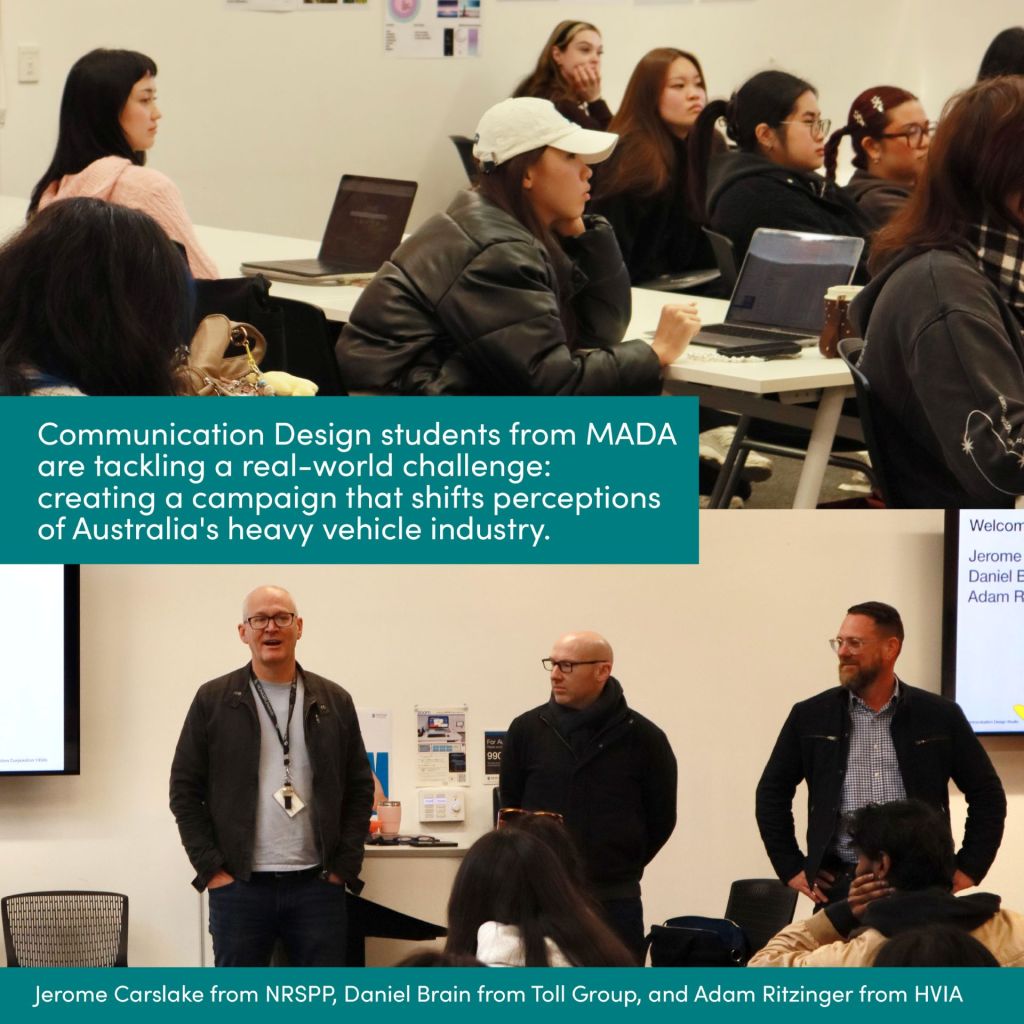
Joining Toll was Chief Technical Officer Adam Ritzinger from HVIA, who spoke to the technical and innovation that shape modern heavy vehicle operations and makes Australia a global leader with a growing skill shortage.
From there, the group moved outdoors for the part of the day most students won’t forget in a hurry — a walkaround of a brand-new Toll prime mover, guided by the driver who operates it.
Standing beside a cab that towers well above head height, students were shown the blind spots, the safety technology built into modern trucks, and the sheer scale of vehicle a driver manages every day, in every kind of traffic, on every kind of road.
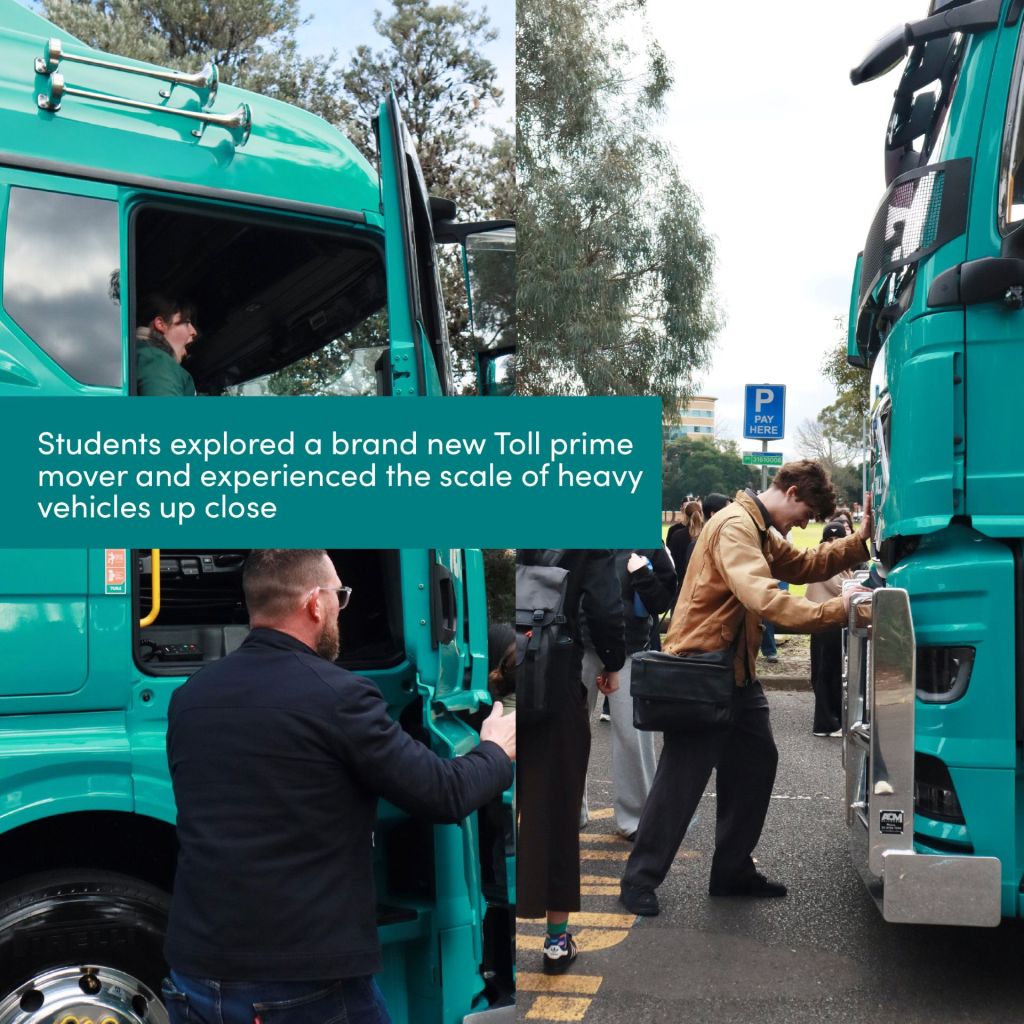
It’s an experience that goes to the very heart of the brief: modern trucks are among the most technologically advanced vehicles on Australian roads, engineered with systems that support the driver, reduce fatigue and protect everyone sharing the road with them.
That’s not the story most people carry around in their heads when a truck pulls up alongside them at the lights — and that gap between perception and reality is exactly what this project sets out to close.
Why This Brief; And Why Now?
Delivered through the NRSPP in partnership with NTARC, Toll Group and HVIA, the brief asks students to develop a distinctive visual identity for a road safety campaign that does three things at once: builds empathy and respect for professional drivers among everyday road users; repositions the heavy vehicle sector as a safe and technologically sophisticated place to work; and makes trucking a career prospect worth considering for people who might otherwise never think of it.

A second stage of the project asks students to extend that identity further, exploring how it can sit alongside the NRSPP’s own brand — a standalone campaign with a credible, connected partner behind it, using the NRSPP’s industry network to carry the message to the people who can act on it.
For NRSPP, days like this are the model in miniature. The program exists to connect industry, research and practice, and putting design students directly in front of drivers, safety leads and industry representatives is exactly the kind of cross-sector engagement it was built to broker — turning a design brief on paper into a lived understanding of the job, the vehicle and the people behind the wheel.
What Comes Next?
Armed with a much clearer picture of who they’re designing for, students now move into the identity development phase of the project. It’s early days, but the brief is ambitious by design: done well, this isn’t just a design exercise — it’s an attempt to shift attitudes, build genuine respect on the road and support the future of Australia’s trucking workforce. The NRSPP connects industry, government and research to advance workplace road safety across Australia. This engagement was delivered in partnership with Toll Group, NTARC and HVIA.