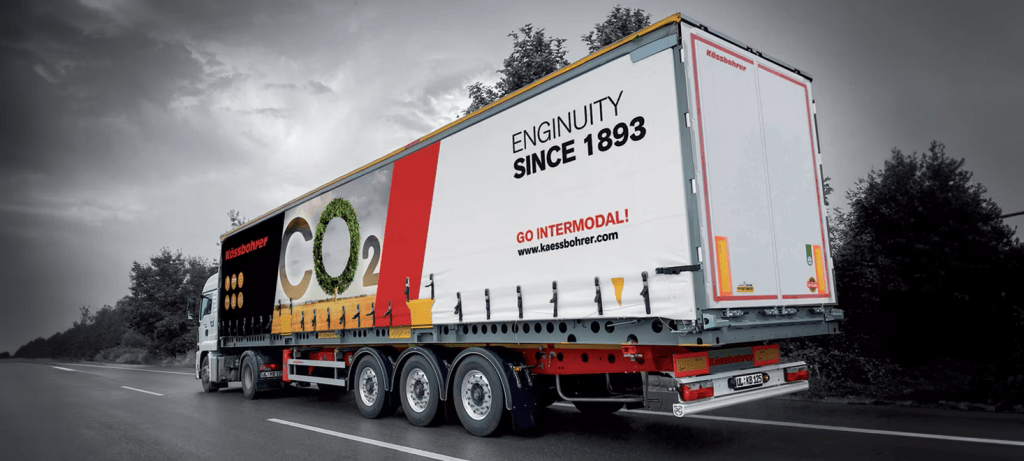
While decarbonisation, energy efficiency, productivity and alternative fuels remained front-and-centre at the recent IAA Transportation commercial vehicle expo in Hannover, many conversations led to the stringent emissions targets that are set to be imposed on European trailer manufacturers.
In 2024, European Union (EU) regulation 2024/1610 was enacted and imposed CO₂ emissions requirements onto heavy trailers. It mandates an emissions cut of 10 per cent by 2030 for new semi-trailer models, and 7.5 per cent for new trailers other than semi-trailers.
In the trailer design space, the opportunities to reduce trailer emissions are somewhat constrained, but include improved aerodynamics, reduced rolling resistance, lighter weight, and the use of regenerative and powered axles.
Nonetheless, if the targets are not met, stringent fines are imposed – up to €4,250 per gram of CO₂ for every tonne-kilometre will be payable from 2030, potentially exposing manufacturers to annual penalties in the order of millions of Euros.
While no such emissions regulations have been floated locally, Australia has a history of adopting other international emissions reduction targets for passenger and commercial vehicles, mostly recently regulating the Euro VI vehicle combustion engine emissions rules under Australian Design Rule 80/04.
In July earlier this year, the CEOs of 30 leading European trailer manufacturers converged in Belgium to sign a joint declaration and petition, calling on the European Commission and the European Parliament to review and adjust the emissions regulation imposed on European trailers.
The group jointly cited that the regulations may have a significant adverse impact to that intended, and could lead to a rise in transport emissions, the loss of jobs, and erosion of local manufacturing and industrial capabilities.
The emissions calculation method itself sits at the heart of the concerns raised. The regulation requires manufacturers to calculate an emissions level for their trailers using the ‘Vehicle Energy Consumption Calculation Tool’ (VECTO) simulation package, which combines vehicle characteristics with standardized reference loads and duty cycles to yield baseline emissions values.
Many industry experts claim that the VECTO method is too simplistic, as it always assumes the same trailer payload, and treats the additional weight of productivity and efficiency features such as multi-deck designs and tail lifts negatively.
As such, a trailer designed to achieve the lowest-possible result in the VECTO simulation would not offer the highest productivity, and a fleet of trailers meeting the emissions reduction requirements would be higher in number than the fleet of conventional trailers to perform the same freight task.
Overall, European trailer manufacturers support the EU’s climate targets but warn that the rules could increase CO₂ emissions rather than cut them. Their five collective requests on the European Commission and Parliament include lowering the emissions reduction target to 5 per cent, adjustment of the penalty level and an overhaul of the VECTO tool.