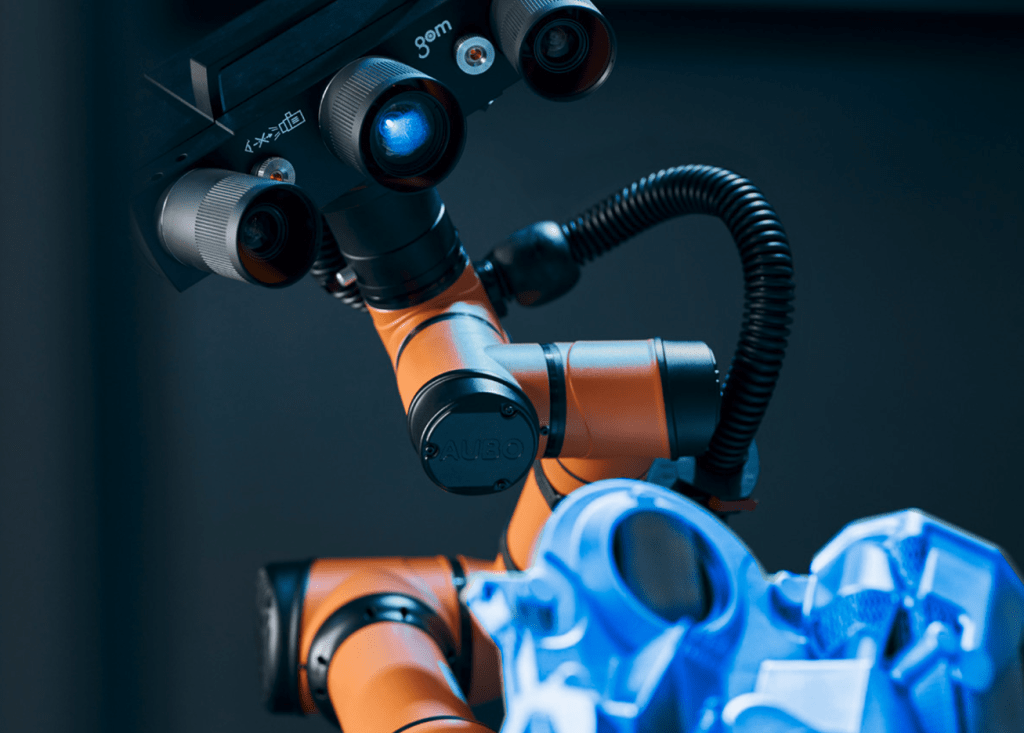
The Sydney Manufacturing Hub (SMH) is a Core Research Facility at the University of Sydney, specialising in advanced manufacturing and end-to-end workflows.
The hub offers cutting-edge capabilities in pre- and post-processing of metals, ceramics and polymeric materials. These processes are digitally enabled through integrated software, sensors and process control systems.
The SMH supports industry and research needs across a range of sectors including aerospace, defence, transport, medicine and agriculture. A typical application involves consolidating multiple discrete parts – such as gaskets, seals and fasteners – into a single, additively manufactured component. This reduces inventory requirements, improves performance and reliability, lowers lifecycle costs and significantly cuts weight – an especially valuable outcome for transport-related projects.
The hub offers a fully integrated, closed-loop workflow that supports every stage of manufacturing – from developing new alloy materials and atomising metal powders, to advanced processes such as laser and electron beam melting, cold spray, friction stir welding, hybrid-arc wire deposition, five-axis CNC machining, EDM precision finishing, heat treatment, hot isostatic pressing, simulation-led CAD design and final part validation.
These capabilities make SMH especially relevant to transport innovation and research into new materials, optimised part design, point-of-need production, rapid prototyping, process certification, repair methods and automation of advanced manufacturing.
Unlike traditional casting or forging, additive processes at SMH enable minimum viable order quantities of just one part – without the need for custom tooling, moulds or high material waste. Lead times for developing new parts are dramatically reduced. Virtual models created in CAD act as “digital twins,” directly driving the manufacturing process layer by layer. Design iterations are easily managed by editing the model and rerunning the build – avoiding the complex and costly retooling required in traditional methods.
With metal additive manufacturing, unused feedstock powders can be recycled across multiple builds, maintaining material specifications until fully consumed. This efficiency contrasts sharply with traditional subtractive methods, where machining waste is often difficult to recycle due to contamination and requires further energy-intensive remelting before reuse.
Whether you’re focused on prototyping, small-scale production or developing cutting-edge materials and processes, SMH provides the tools, expertise and digital infrastructure to take ideas from concept to finished product – faster, cleaner and more efficiently.
For more information visit the SMH website or email smh.info@sydney.edu.au.