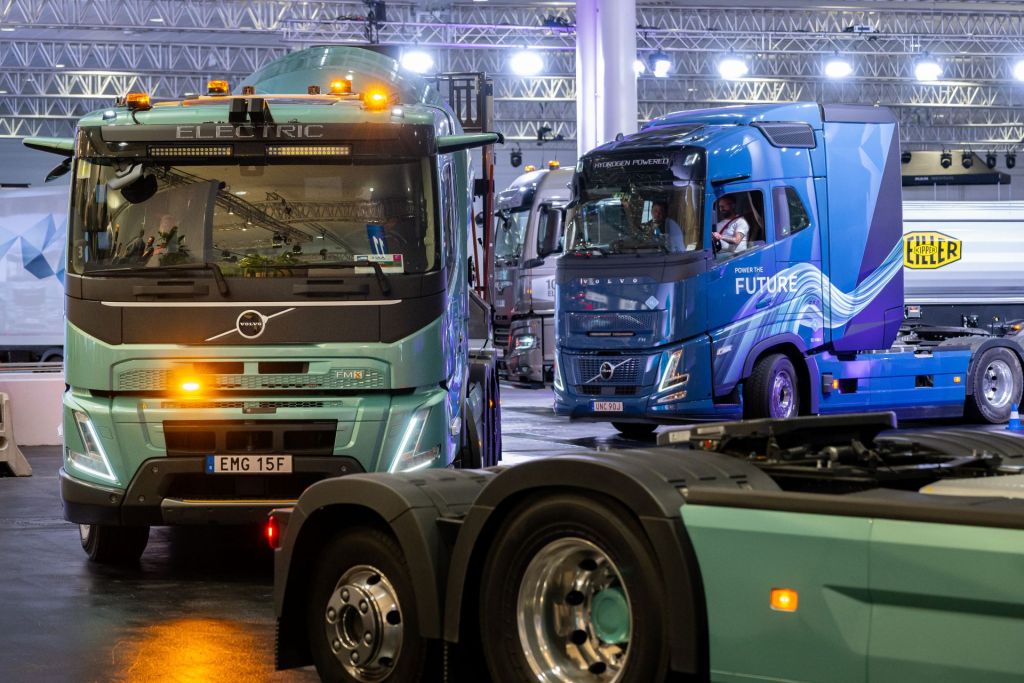
The race for freight transport fuels of the future is shaping up to be a multi-horse event, with truck manufacturers and energy suppliers showcasing a diverse range of powertrains and energy sources at IAA Transportation in Hannover, the leading biennial European international trade event for commercial vehicles, logistics and the transportation sector.
While battery electric power featured heavily across trucks and some trailers, it was joined by both liquid and gaseous forms of hydrogen, hydrogen for combustion, HVO and several fuels that are less well-known in Australia – Bio-CNG and Bio-LNG.
Mercedes-Benz debuted its ‘NextGenH2’ truck, featuring a sector-first on-board liquid hydrogen storage system, feeding into the proven ‘Cellcentric’ hydrogen fuel cells. The system carries 85kg of hydrogen across two storage tanks mounted in the conventional location, a refuelling time of 15 minutes, and a range of up to 1,000 kilometres. The manufacturer plans to begin with a limited series of 100 trucks in European customers in 2026, and aims for full-series production in 2030.


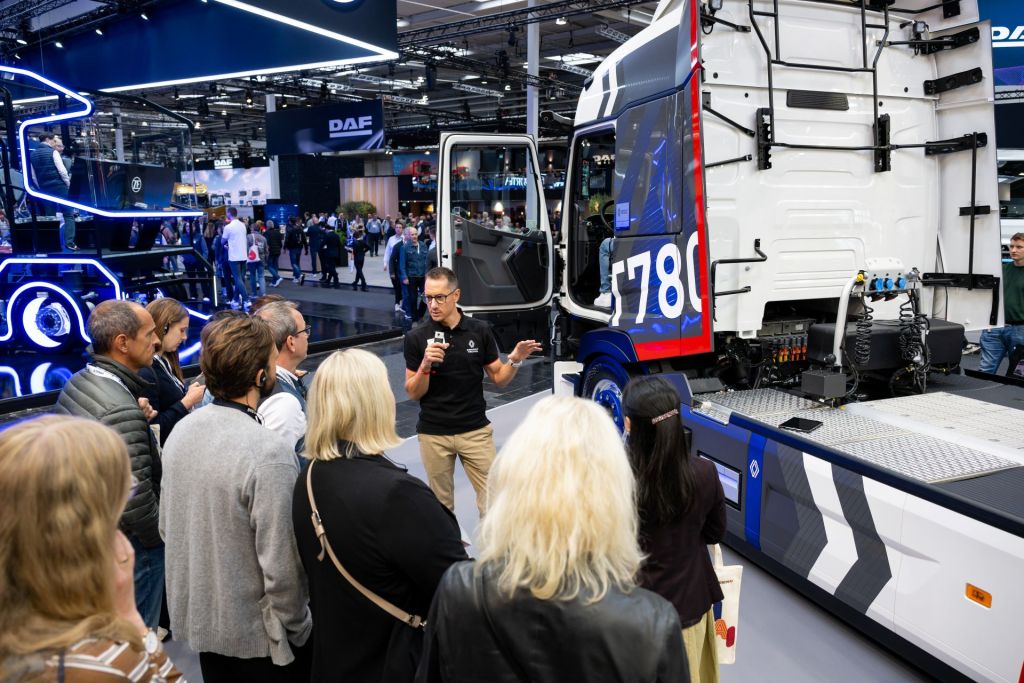
Bio-CNG and Bio-LNG were on offer from several European energy providers. Both fuels start as raw biogas derived from organic waste and agricultural byproducts, which is then purified into biomethane. From there, it is compressed to a concentrated gaseous form as Bio-CNG, or compressed even further and cooled to its liquid form, becoming Bio-LNG.
In either case, the result is a 100 per cent renewable combustible fuel that offers reduced carbon emissions, the possibility of lower cost when compared to conventional diesel, and most crucially, long-term price stability when produced locally using locally-derived wastes and byproducts.
Liquified hydrogen and Bio-LNG were both noted as dramatically increasing the energy density available when compared against their gaseous equivalents, and could thereby offer Australian high-mass and remote area operations a unique and feasible decarbonisation pathway.