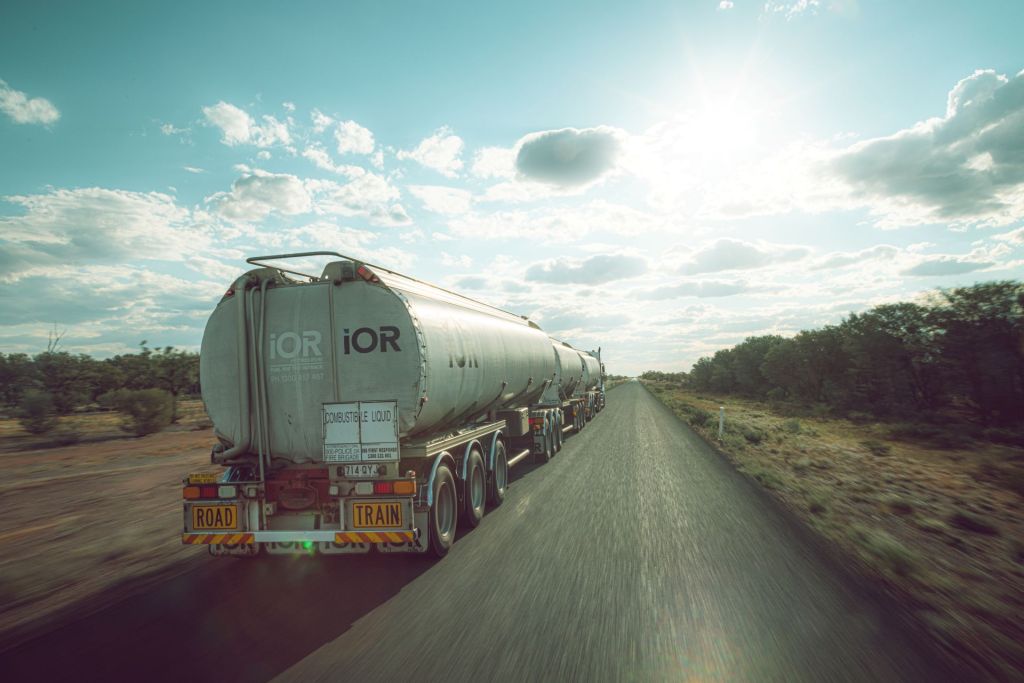
Fuel supply to Australia remains stable and most ships continue to arrive unimpeded, despite reports of fuel outages especially in regional areas and among independent retailers.
The latest Minimum Stockholding Obligations (MSO) data, published Saturday and available here, reveals automotive petrol, automotive diesel and aviation kerosene stocks remained steady in the week ending March 17.
The data – which is now being released weekly by the Department of Climate Change, Energy, the Environment and Water – shows diesel stocks sat at 2.804 billion litres as at Tuesday, the equivalent of 30 days’ supply and 18 per cent above the “required volume”.
Petrol stocks topped 1.644 billion litres, equating to 38 days’ supply, 78 per cent above the “required volume”; and aviation fuel stocks stood at 828 million litres, enough for 30 days’ supply, 26 per cent ahead of the “required volume”.
Release of the latest stockholdings data followed a National Coordination Mechanism’s National Fuel Supply Briefing last Thursday at which the National Emergency Management Agency provided an update on the key issues of supply and pricing.
The briefing – attended by HVIA – was delivered by Deputy Coordinator General, Katarina Carroll, and the Deputy Secretary of the Department of Climate Change, Energy, the Environment and Water, Matthew Brine.
This followed the Prime Minister’s announcement that Anthea Harris has been appointed as the new Fuel Supply Taskforce Coordinator following the National Cabinet meeting, a summary of which can be accessed here.
It also came after Wednesday’s weekly industry briefing at which Federal Transport Minister, Catherine King, confirmed the temporary relaxation of fuel quality standards only applies to petrol, not diesel. The official determination is available here.
Supply
In terms of crude oil, Australia’s larger supplying nations in Asia, which traditionally rely on Middle Eastern feedstock, are diversifying supplies including from Africa, Latin America and Russia.
Following the International Energy Agency’s call to release 400 million barrels from the 32 participating nations, 422 million barrels were eventually committed. This includes an Australian domestic release of 762 million litres into the market.
On March 16, Climate Change and Energy Minister Chris Bowen finalised the legal instrument to enable this release and it is starting to flow to areas where there are localised shortages, including independent fuel retailers and regional areas.
Seven of the 11 domestic suppliers have now provided plans to address these shortfalls, with two more imminent.
In addition, on Wednesday the Australian Government announced a temporary adjustment to diesel standards, which will help suppliers bring more fuel into the domestic market for farmers, truckers and regional communities
The six-month adjustment will lower what’s known as the flashpoint for diesel, from 61.5 degrees Celsius, to 60.5 degrees Celsius, increasing diesel supply options from refiners and international sources.
Minister for Climate Change and Energy Chris Bowen says the changes will give Australian refineries more flexibility for making diesel, and widen the markets from which they source diesel, including from the US, Canada and Europe, which allow diesel with lower flashpoints “This will give companies more flexibility and more options to adjust supply chains to manage disruption from the Middle East,” he adds.
Bowen says flashpoint changes have no impact on engines or emissions. “Australia typically has a slightly higher temperature flashpoint owing to our hotter climate however when the flashpoint was last lowered in 2020, we saw no adverse impact on engines or emission,” he says. “This flashpoint change does not require any changes to storage or handling protocols.”
At a state level, governments have increased their activity to ensure supply and in some cases, that includes specialist appointments, or enacting their emergency powers to ensure supply.
The briefing also addressed specific commodities affected by the market disruption, such as technical grade urea for fertiliser and plastics/petrochemicals, which the federal Office of Supply Chain Resilience is preparing proactive plans for.
Prices
Whilst there are some areas of localised shortage, the more pressing concern is pricing, with the Terminal Gate Price rising from about $1.50-1.60 to between $2.941-2.994 across key capital cities as of March 24. This is predicted to increase further.
This obviously affects the trucking industry and with fuel being one of the largest input costs for operators, cash flow remains a huge concern across the board. Collectively, the industry is calling for financial support and a range of other government measures.
Other industries are also affected including agriculture, pharmaceuticals and aquaculture. The community are likely to see significant price increases as this flows through the supply chain.
A number of industry bodies representing truck operators, including the Australian Trucking Association (ATA), have advised members to review costs and bring forward fuel levy adjustments and/or rate reviews to cover spiralling fuel prices.
At the same time, the ACCC has launched an enforcement investigation into allegations of anti-competitive conduct based on reports concerning diesel availability to independent wholesalers and distributors servicing regional and rural Australia.
In a bid to help the industry manage the impacts, yesterday the Government announced it would amend the Fair Work Act to allow truckies and road transport businesses to make an emergency application for a contract chain order to deal with the current spike in fuel prices caused by the war in the Middle East.
Under the Fair Work Act, the Fair Work Commission can require transport clients, including retailers, mining companies and manufacturers, to offer fair contract terms, ensuring that operators are paid enough to cover the cost of fuel.
Currently, a minimum of six months is required for a contract chain order, but the Government’s amendment will remove that wait time.
Minister for Infrastructure, Transport, Regional Development and Local Government, Catherine King, says: “Without trucks, the movement of essential supplies across Australia stops.
“Fuel price spikes are affecting everyone, but no one is feeling it more acutely than those whose day-jobs and livelihoods are behind the wheel of heavy vehicles.
“That’s why we’re making it easier for them to renegotiate how costs are shared across the supply chain.
“It’ll mean truckies can get back to moving the items we need, without worrying about their business stalling due to rising costs.”