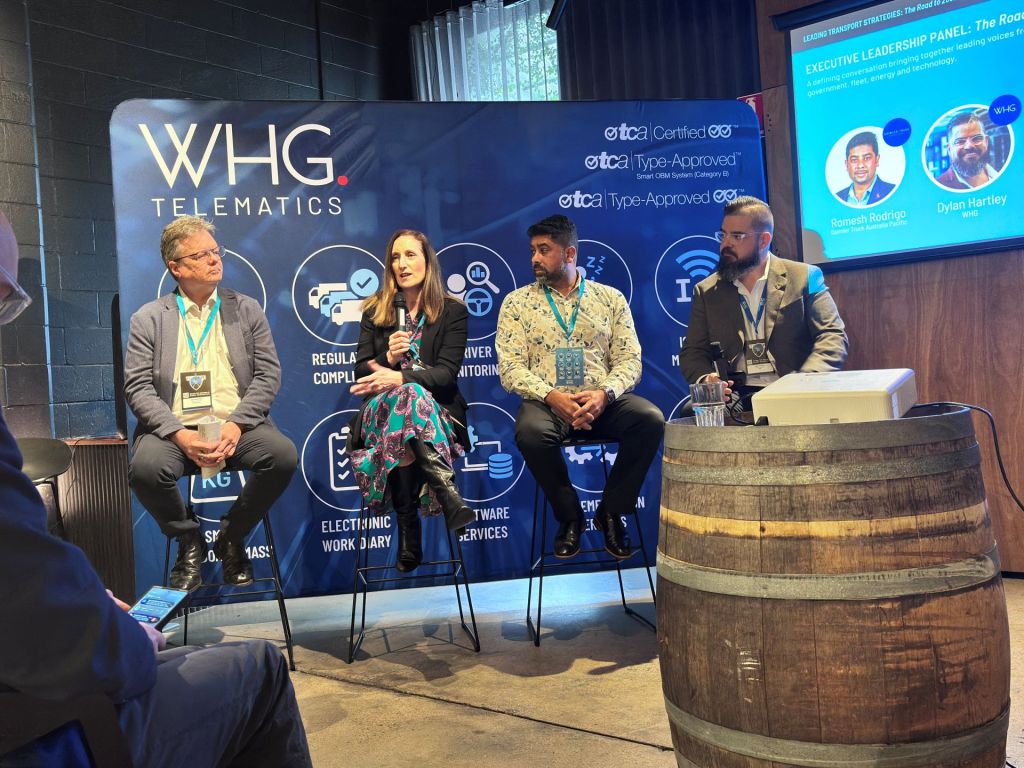
Australia’s transport industry will need to tackle safety, technology, energy, infrastructure, regulation and workforce challenges together if it is to successfully navigate the transition toward 2030.
That was one of the key messages to emerge from TechDRIVE Connect Brisbane held last week, which brought together transport operators, regulators, manufacturers, technology providers and industry leaders for a day of practical discussion about the changes already reshaping the sector.
Hosted by WHG, the event focused on how emerging technologies and changing regulation can be translated into practical outcomes for transport businesses, while recognising that successful adoption ultimately depends on trust, commercial viability and the ability to deploy solutions at scale.
Across discussions on safety, connected transport, AI, alternative fuels, autonomous vehicles, data, regulation and workforce pressures, a consistent theme emerged: there is no single technology or policy change that will define the future of transport.
Instead, the challenge is increasingly about integration – how technology, regulation, infrastructure, energy and people work together in real transport operations.
Safety, Data + Technology Need To Work Together
The program opened with Gavin Hill from Austroads/Transport Certification Australia (TCA) and Paul Daly from the National Heavy Vehicle Regulator (NHVR), who discussed the Australian transport outlook, Heavy Vehicle National Law reform, Safety Management Systems (SMS), EWD 2.0 and the growing importance of trusted and assured data.
A key focus was the practical implementation of safety management systems and the need for operators to move beyond simply having policies and procedures in place. Fleets increasingly need to be able to demonstrate how safety risks are identified, managed and monitored in day-to-day operations, with evidence that their systems and controls are working in practice.
The discussion highlighted the growing role of technology and assured data in supporting both compliance and productivity, giving operators greater visibility across their fleet, helping demonstrate that safety systems are working in practice, and supporting better-informed access and operational decisions.
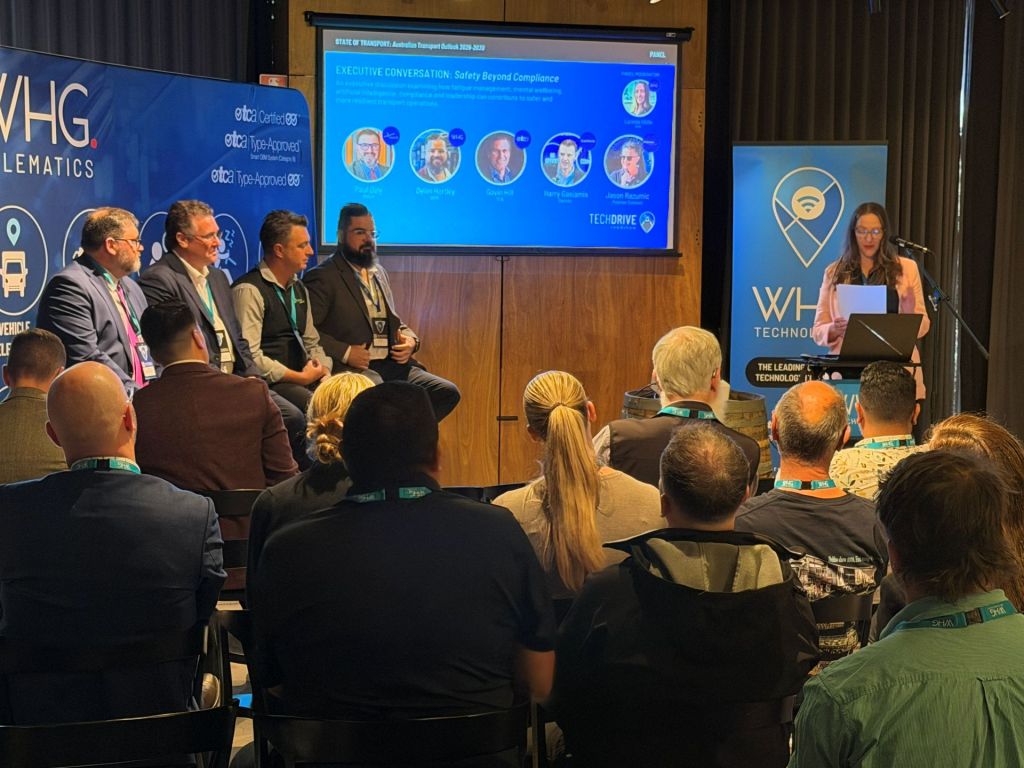
That theme continued through the ‘Safety Beyond Compliance’ panel, bringing together Dylan Hartley and Pieter Smuts from WHG, Jason Razumic from Polymer Connect, Paul Daly from NHVR and Gavin Hill from Austroads, alongside insights from Harry Gasiamis from Garmin via video.
Moderated by Lucinda Ubilla from WHG, the panel explored the relationship between fatigue, mental wellbeing, AI, privacy, technology and leadership.
A central message was that technology alone does not create better safety outcomes.
Successful deployment depends on drivers and operational teams understanding why technology is being introduced, how information will be used and how it can support safer decision-making rather than simply creating another layer of monitoring.
The panel also considered the shift from responding to safety events after they occur toward using data and emerging technologies to identify and manage risk earlier.
Energy Transition Must Work In The Real World
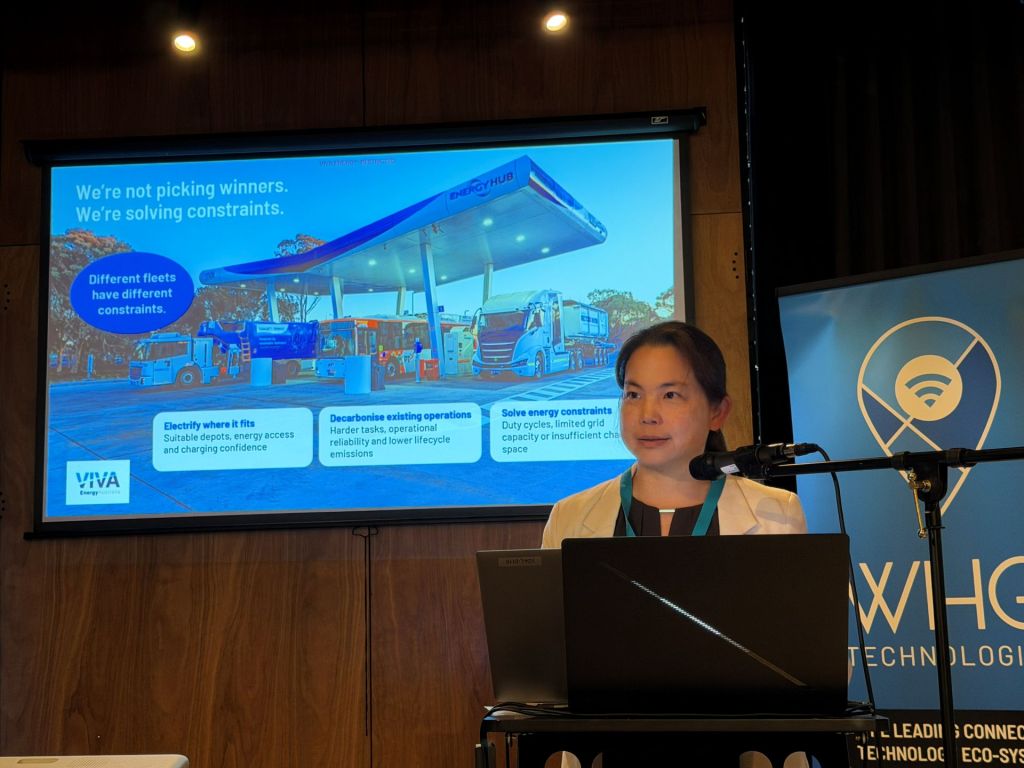
The transition beyond diesel was another major focus of the day, with Sandra Lau from Viva Energy Australia and Tim Camilleri from Volvo Group Australia examining the practical realities facing fleet operators.
Rather than expecting one technology to replace diesel across every transport application, the discussion pointed toward a more diverse future involving battery-electric vehicles, hydrogen, renewable fuels and increasingly efficient conventional technologies.
Sandra Lau highlighted that there was unlikely to be a single solution for diesel displacement, with infrastructure, depot access, routes, duty cycles, commercial contracts and energy availability all influencing the right technology for each operation.
Tim Camilleri provided the vehicle and manufacturing perspective, including Volvo Group Australia’s work in battery-electric heavy vehicles and local manufacturing, while emphasising the importance of greater industry collaboration and scale.
The broader message was clear: changing the vehicle is only one part of the transition.
For alternative technologies to succeed, fleets also need access to the right infrastructure, energy supply, operational models and commercial conditions.

Preparing Transport For 2030
The afternoon executive panel, moderated by HVIA’s Harrison Hunkin, brought together Romesh Rodrigo from Daimler Truck Australia Pacific, Cameron Dunn from FBT Transwest, Susan Harris from ITS Australia and Dylan Hartley from WHG.
The discussion explored AI, autonomous vehicles, fleet investment, connectivity, workforce pressures and what Australian transport businesses should be preparing for as the industry approaches 2030.
The panel also challenged the idea that the future of transport is simply about replacing today’s vehicles with new technology.
Romesh Rodrigo highlighted the growing importance of areas including logistics optimisation, route planning, automation and infrastructure, alongside the transition toward lower-emission vehicles and fuels.
The changing role of people within transport was also a recurring theme, with technology expected to reshape jobs across driving, maintenance, logistics, fleet management and infrastructure rather than simply remove people from the operating model.
Across the discussion, there was broad recognition that the industry will continue to evolve through a combination of technology, people and infrastructure rather than any single major change.
Creating A Forum For Industry Collaboration
For WHG CEO – Australia, Dylan Hartley, one of the strongest outcomes from TechDRIVE was the willingness of different parts of the industry to participate in the same conversation.
“What stood out in Brisbane was the level of genuine collaboration across the industry. Operators, regulators, manufacturers and technology providers are all dealing with different parts of the same challenge,” he says.
“There is no single answer to where transport is heading. The real opportunity is to bring those perspectives together, understand what works in real operations and find ways to deploy technology and new ideas that are practical, trusted and can scale.”
“That is what we want TechDRIVE to continue to be a forum where the industry can have those conversations openly and contribute to where we go next.”
TechDRIVE Connect Brisbane forms part of the broader TechDRIVE Roadshow, bringing together industry participants around technology, safety, innovation and the future of transport.
The conversation will continue at TechDRIVE Melbourne at Seaworks on October 21, 2026. For more information and to register, visit whgtechdrive.com.au.