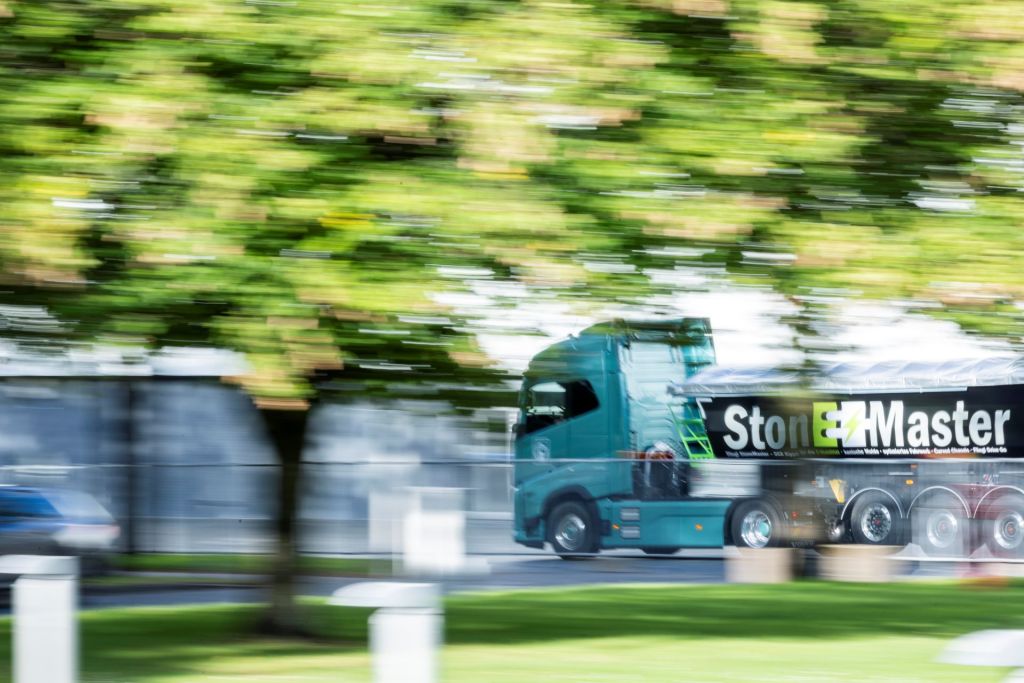
I was lucky enough to be able to attend the landmark industry event IAA Transportation in Germany last month – for those playing at home, IAA is the leading European international trade event and expo for commercial vehicles, logistics and the transportation sector, and takes place in Hannover every two years.
The scale and spectacle of the show itself is hard to comprehend. It simply must be seen to be believed, but you can’t afford to get blinded by the lights.
The best insights come from diving deep into technical matters with the industry experts at the hundreds of stands, which is how I filled my time across three of the show’s days.
So, what were my key takeaways in terms of decarbonisation developments from IAA 2026? Read on!
Boldly Going Where No EV Has Gone Before
Major European truck OEMs featured a new generation of extended range battery-electric trucks. Volvo, Scania, MAN and Renault each displayed brand-new battery-electric models with ranges extending as far as 700 kilometres, for Gross Combination Masses (GCMs) above 40 tonnes.
For European ‘long-haul’ intercity operations, the 700-kilometre range is the sweet spot for a full day of operations undertaken by the workhorse of choice, the triaxle semi-trailer.
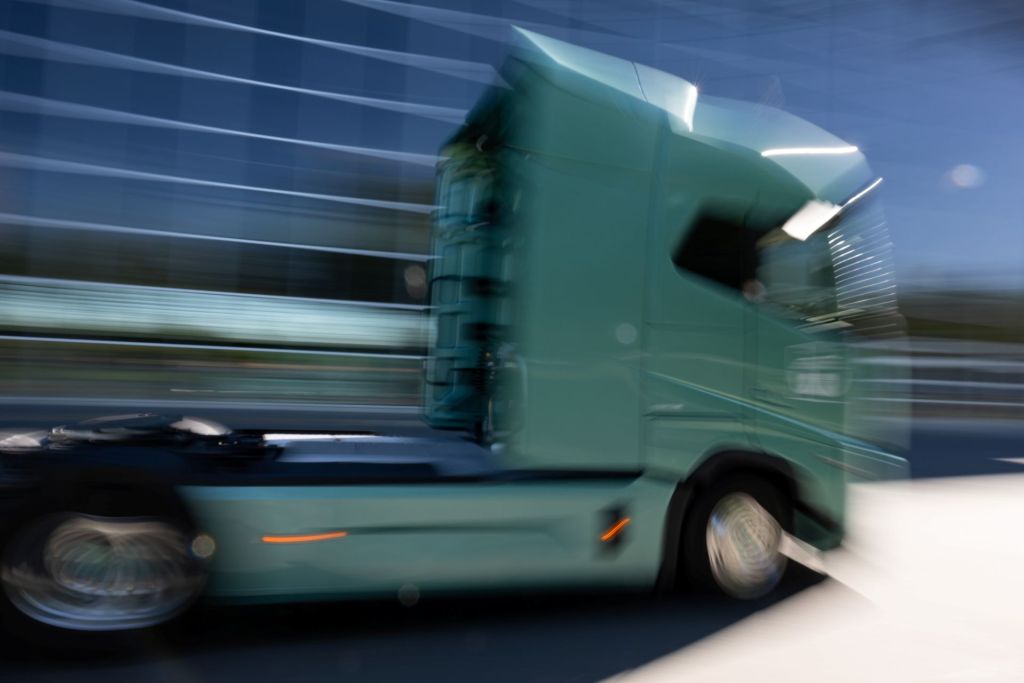
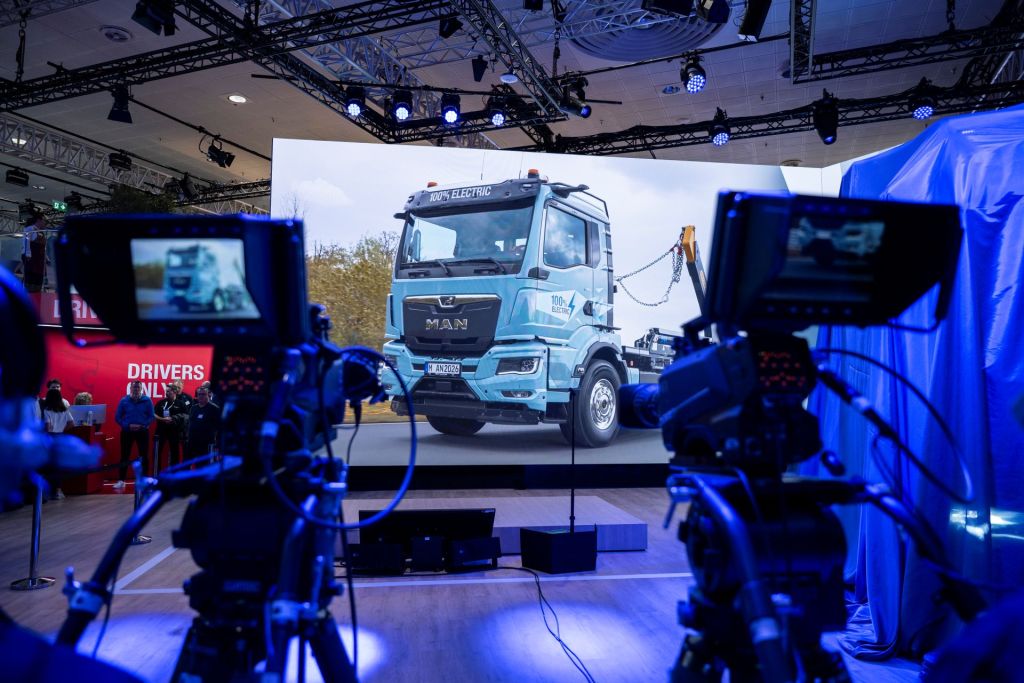
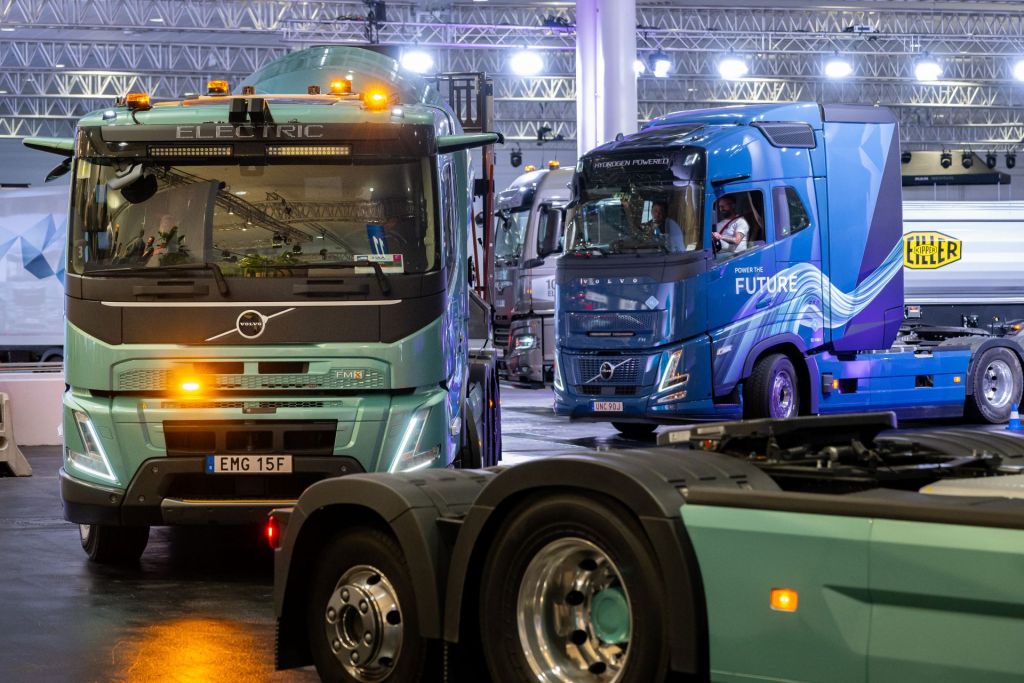
Major European truck OEMs featured a new generation of extended range battery-electric trucks
In most cases the extended range represents double that offered by previous models and is enabled by the fitment of additional battery packs. For example, the new Volvo FH Electric features space for up to eight battery packs on its chassis, achieving a total battery capacity of 780 kilowatt-hours.
The new models appear to have effectively solved the fundamental ‘range vs. payload’ equation for battery electric trucks. But how? More batteries equals more weight, and surely the trucks were already at their gross mass limits? The answer lies in two separate areas – the first is paper-based, and the other at the point where the rubber hits the road.
Higher Productivity Enabled By Regulations
Since 2019, European Union regulations have granted a two-tonne gross mass concession for zero emission heavy vehicles, to directly offset the additional weight of decarbonisation hardware.
This means that the previous GCM limit of 40 tonnes for semi-trailer combinations hauled by diesel trucks increases to 42 tonnes where a battery electric truck is used. Those limits may be increased even further in the future.
If such measures were implemented in Australia, it would be equivalent to increasing the current General Mass Limits (GML) maximum of 43.5 tonnes for semi-trailer combinations to 45.5 tonnes, and the Higher Mass Limits (HML) maximum of 45.5 tonnes to 47.5 tonnes.
Either of which would be game-changing for our local decarbonisation transition, and is indicative of a forward-thinking transport sector that does not turn the other way when a policy lever needs to be pulled. It’s not all smooth sailing across the board though, as explained later in relation to charging, and also, the trailer fleet.
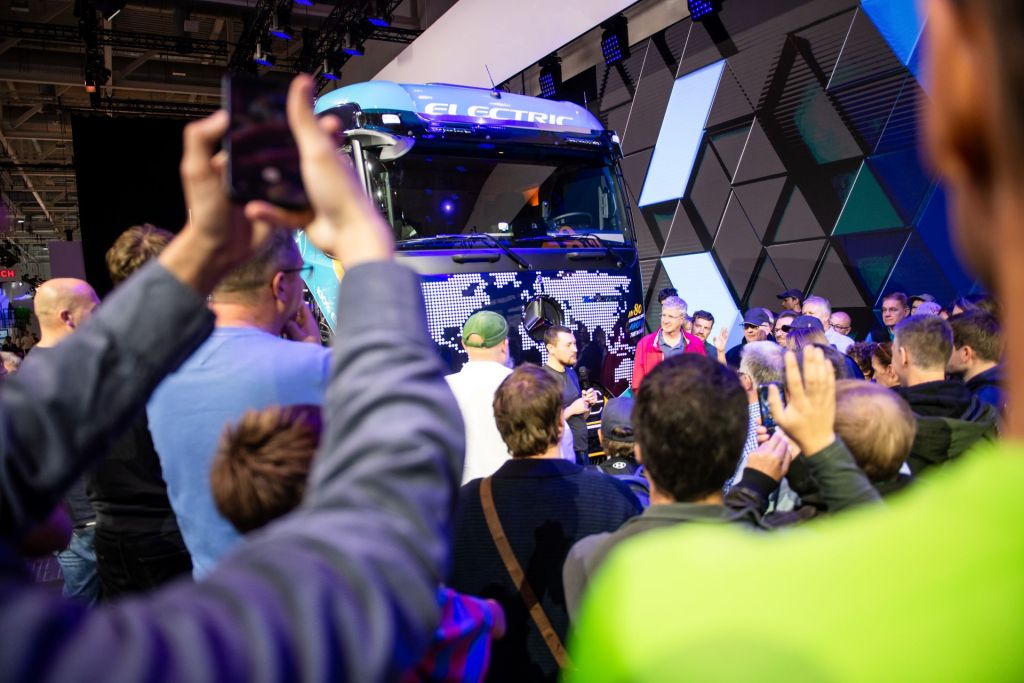
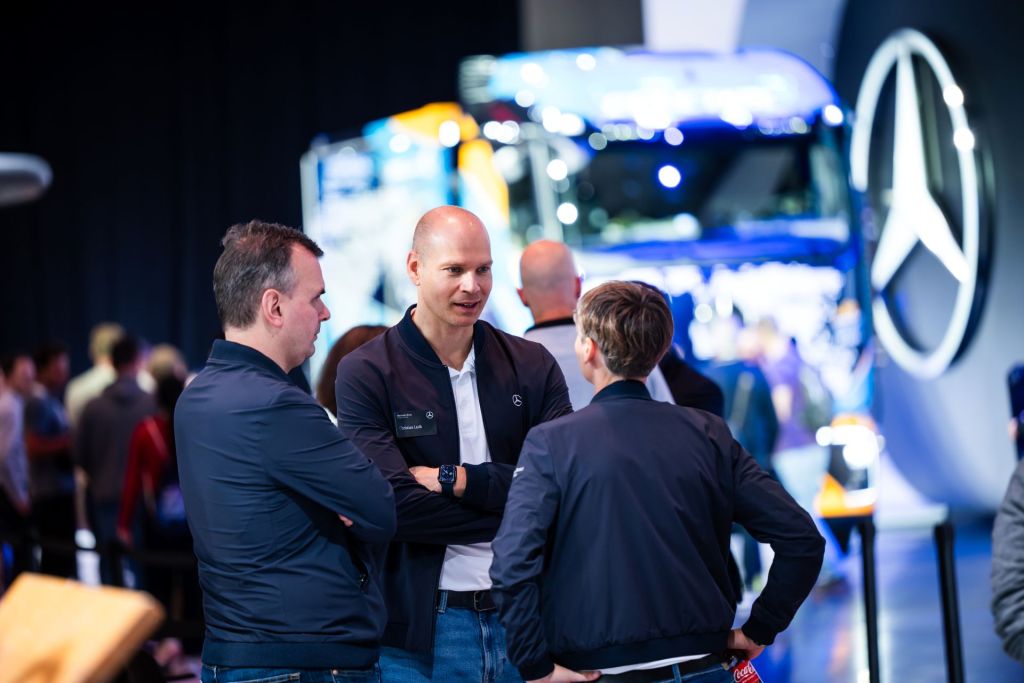
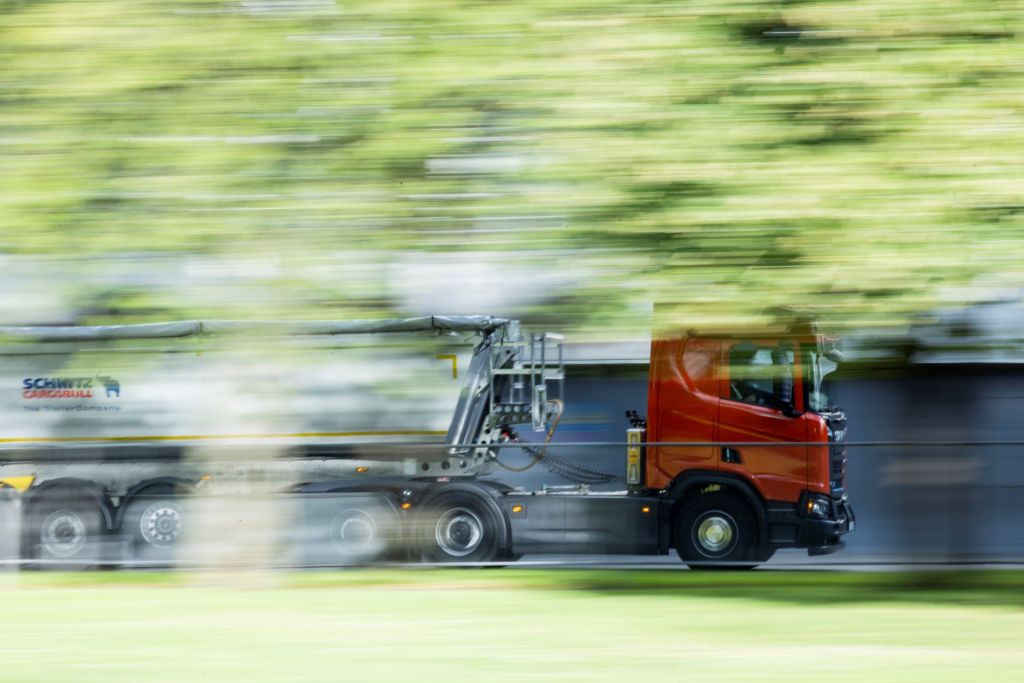
EU regulations grant a two-tonne gross mass concession for ZEHV to offset the additional weight of decarbonisation hardware
Tagging Along
Nonetheless, the real magic lies in the driveline hardware. The additional battery packs have necessitated a new and separate innovation – a lightweight, steerable tag axle nestled behind the truck’s existing drive axle.
Models from MAN, Scania and Renault all featured similar equipment and capabilities. The new tag axles typically ride on smaller 245/70 R17.5 wheels, and effectively transform a vehicle with a physical footprint of a standard 4×2 prime mover into a higher-capacity 6×2 chassis, while offering the same manoeuvrability due to the tag axle also being steerable.
Charging Challenges
Given the prevalence of the topic in Australia, I discussed truck charging with Milence, Europe’s leading battery-electric charge point operator. Around 16 per cent of Europe’s 1,100 public charging points dedicated to electric heavy-duty trucks are operated by Milence.
Crucially, the group estimates that the European public charging network will require a 10-fold expansion by 2030 in order to meet the demand of the electric truck fleet.
It’s a similar story to that faced here locally, where infrastructure lags technology and market demand.
Interestingly, Milence’s calls to government echo our own – prioritisation of strategic road freight corridors, strengthening finance tools to reduce market risk, financial incentives to reduce TCO, among others.
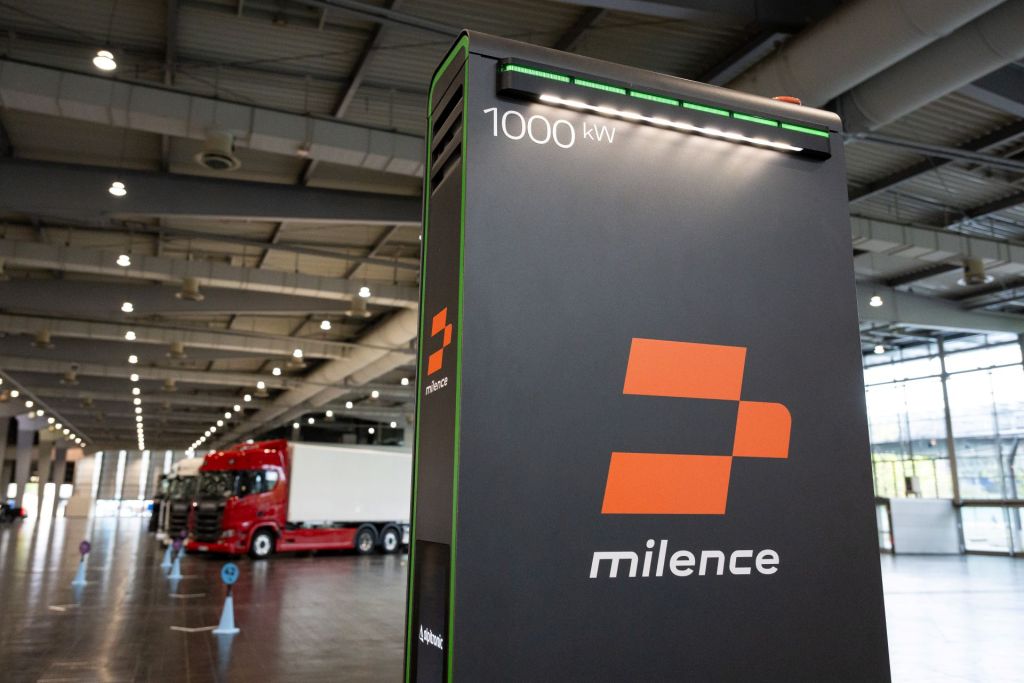
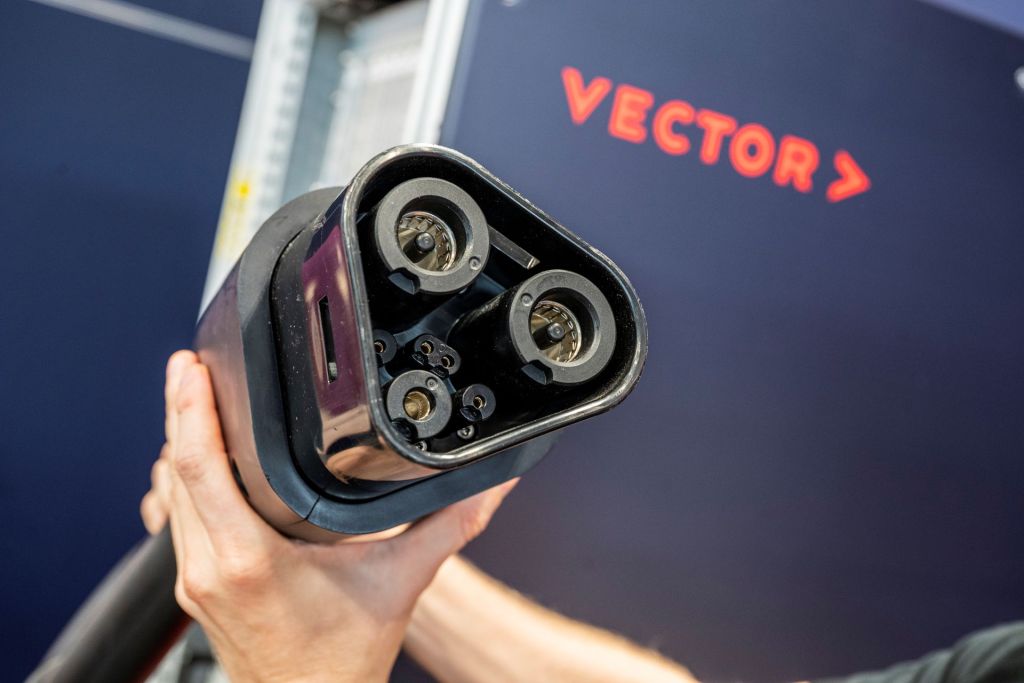
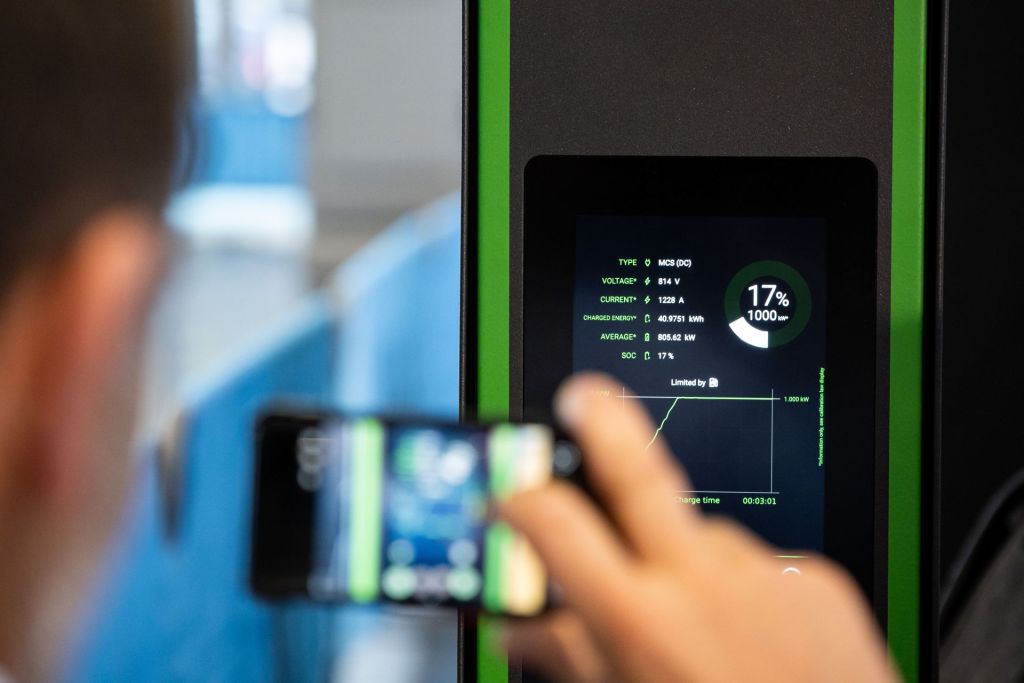
Leading BEV charge point operator Milence estimates the European charging network will require a 10-fold expansion by 2030
Future Fuels Could Be A Close Race
Despite battery electric power featuring heavily across trucks and some trailers, the race for freight fuels of the future is shaping up to be a hotly contested event, with manufacturers and energy suppliers from all over the globe showcasing a diverse range of powertrains.
Battery electric was joined by both liquid and gaseous forms of hydrogen, hydrogen for combustion, HVO and several fuels that are less well-known in Australia – Bio-CNG and Bio-LNG.
Bio-CNG and Bio-LNG were on offer from several European energy providers. Both fuels start as raw biogas derived from organic waste and agricultural by-products, which is then purified into biomethane. From there, it is compressed to a concentrated gaseous form as Bio-CNG, or compressed even further and cooled to its liquid form, becoming Bio-LNG.
In either case, the result is a 100 per cent renewable combustible fuel that offers reduced carbon emissions, the possibility of lower cost when compared to conventional diesel, and most crucially, long-term price stability when produced locally using locally-derived wastes and by-products. If supported by the right policy settings, a local industry could be hugely impactful for Australia’s decarbonisation and fuel security concerns.
Liquid Hydrogen – No Longer Just A Lot Of ‘Hot Air’
Mercedes-Benz debuted its ‘NextGenH2’ truck, which featured a sector-first on-board liquid hydrogen storage system, feeding into its proven hydrogen fuel cells from European manufacturer Cellcentric.
The system carries 85kg of hydrogen across two storage tanks mounted in the conventional location either side of the vehicle’s chassis rails. It offers a refuelling time of just 15 minutes, and a range of up to 1,000 kilometres.
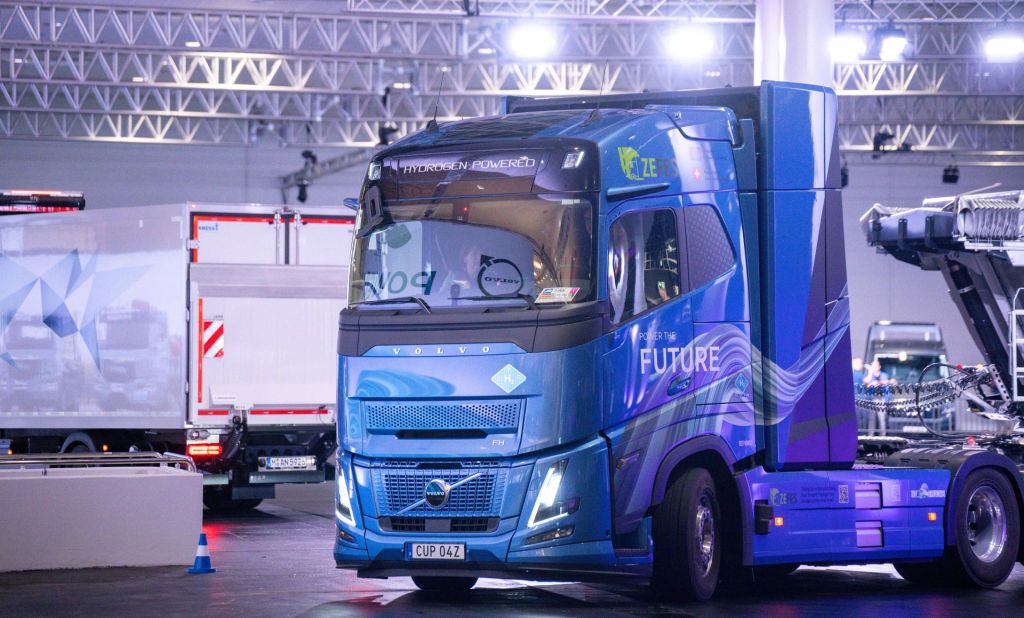
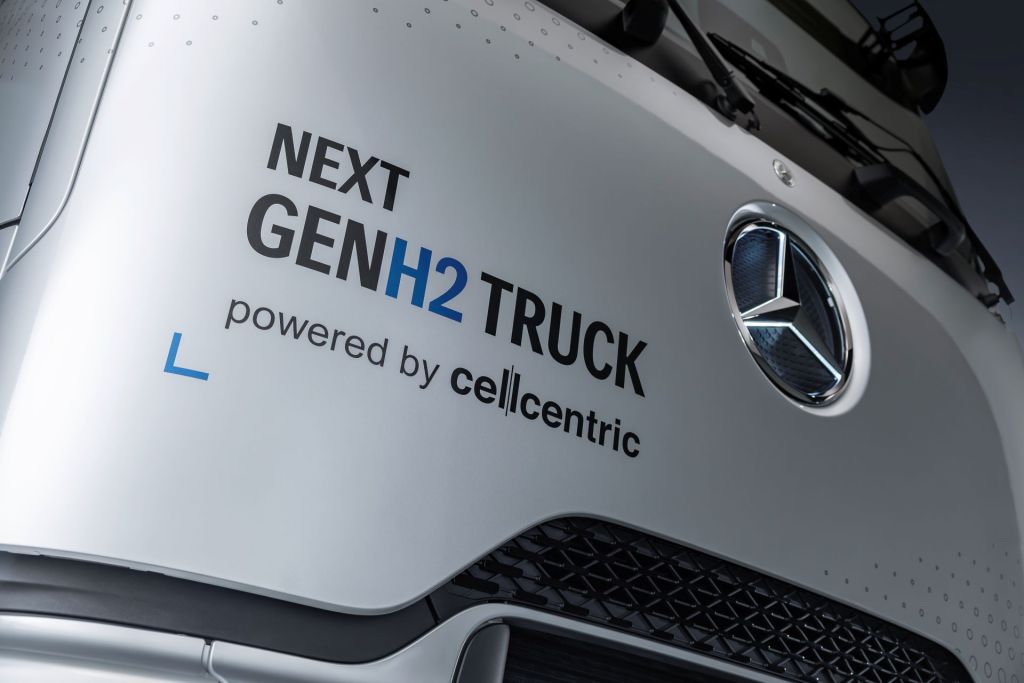
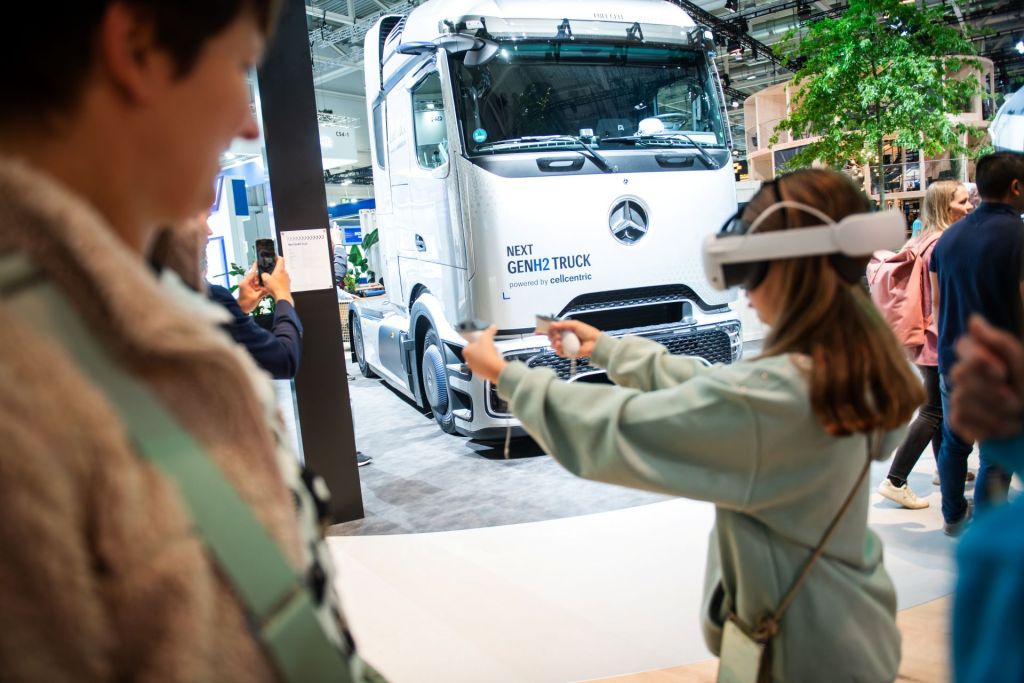
Mercedes-Benz debuted its ‘NextGenH2’ truck featuring a sector-first on-board liquid hydrogen storage system
It also addresses gaseous hydrogen storage volume concerns. When in its gaseous form hydrogen occupies a relatively large volume, which means its storage tanks can also be quite large.
The manufacturer plans to begin with a limited series of 100 trucks operated in the field by European customers in 2026, with series production in sight by 2030.
Trailer Decarbonisation Debate Heats Up
In the trailer space, many decarbonisation conversations led to the stringent emissions targets that are set to be imposed on European trailer manufacturers.
In 2024, European Union (EU) regulations imposed CO₂ emissions requirements onto heavy trailers. An emissions cut of 10 per cent by 2030 for new semi-trailer models, and 7.5 per cent for new trailers other than semi-trailers was enacted.
In the trailer design space, the opportunities to reduce emissions are somewhat constrained, but include improved aerodynamics, reduced rolling resistance, lighter weight, and the use of regenerative and powered axles.
Nonetheless, if the targets are not met, stringent fines are imposed – up to €4,250 per gram of CO₂ for every tonne-kilometre will be payable from 2030, potentially exposing manufacturers to annual penalties in the order of millions of Euros.
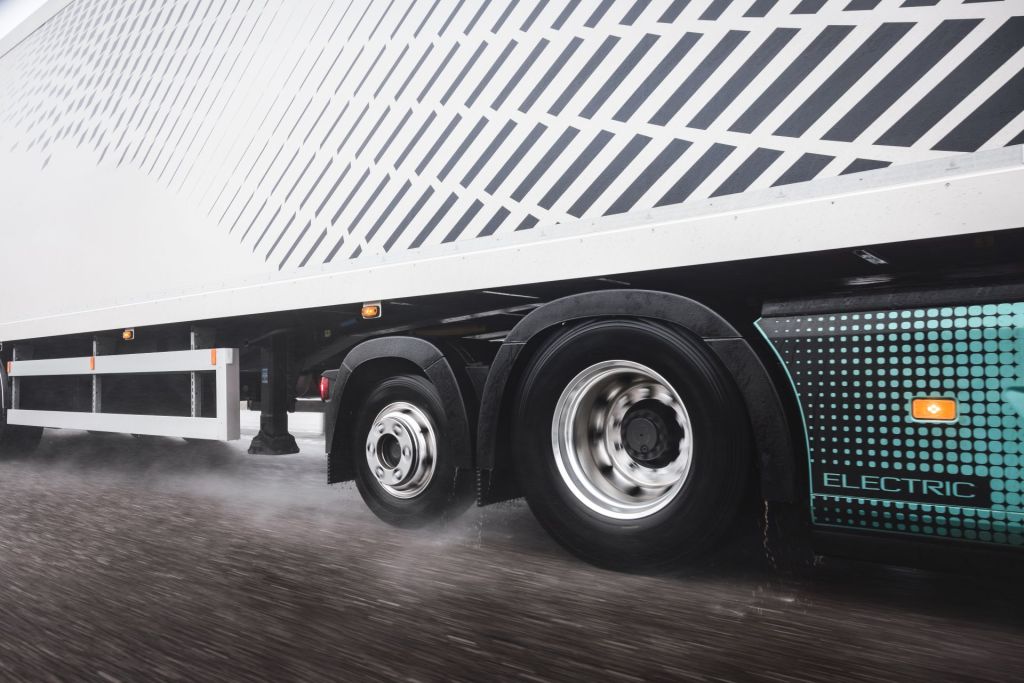
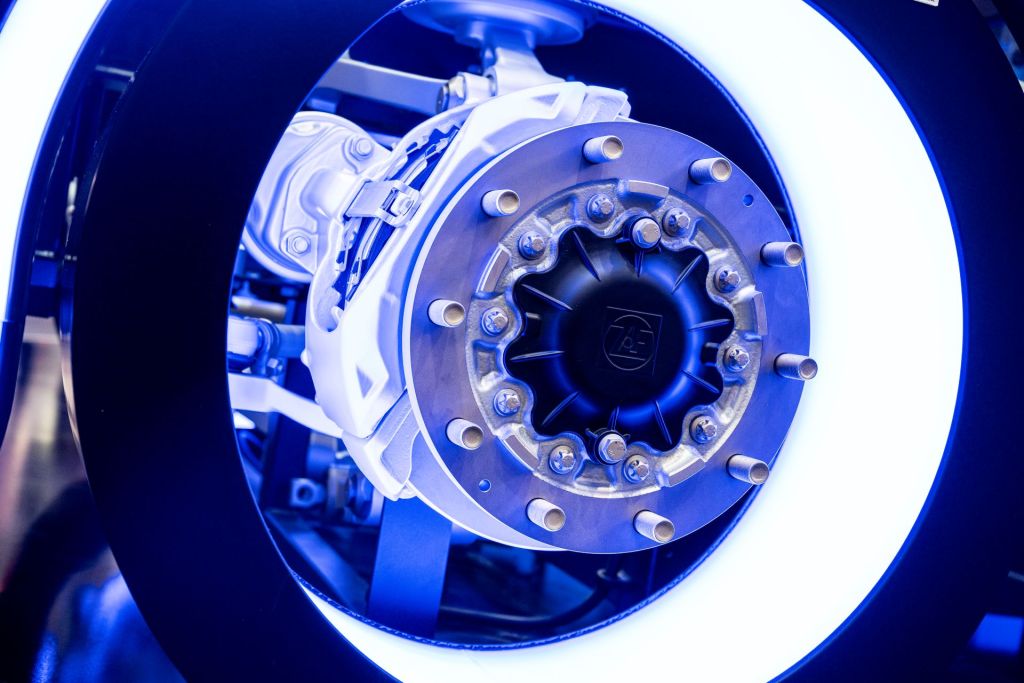
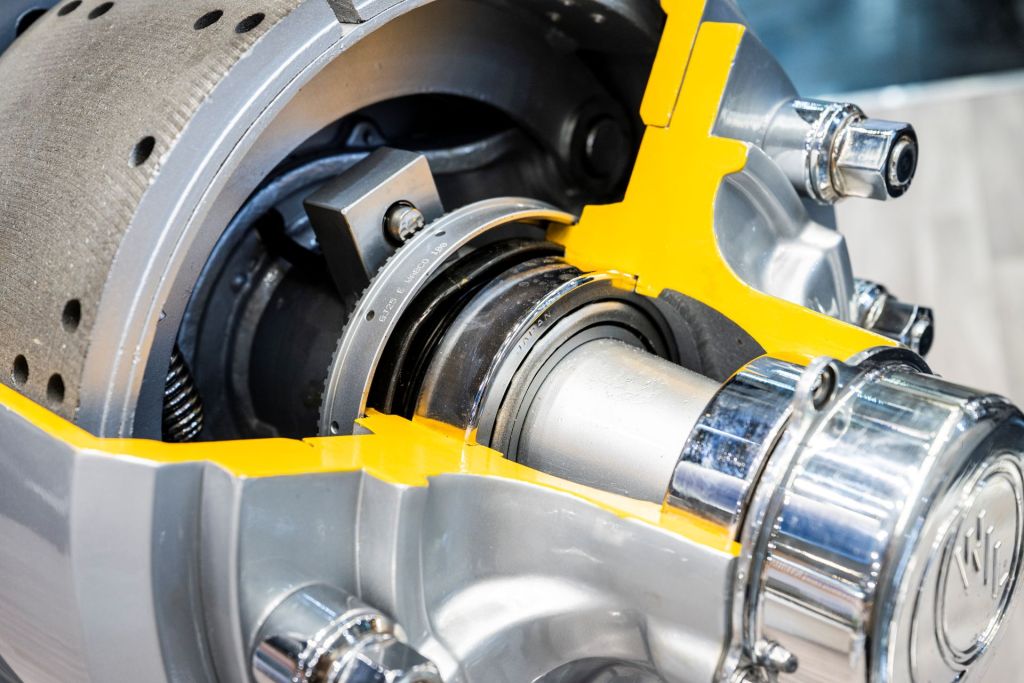
IAA highlighted industry has the technology and solutions to transform the sector, but lacks the right policy and regulatory settings
While no such emissions regulations have been floated locally, Australia has a history of adopting other international emissions reduction targets for passenger and commercial vehicles, mostly recently regulating the Euro VI vehicle combustion engine emissions rules under Australian Design Rule 80/04.
Crucially, in July earlier this year, the CEOs of 30 leading European trailer manufacturers converged in Belgium to sign a joint declaration and petition, calling on the European Commission to review and adjust the emissions regulation imposed on European trailers.
The group jointly cited that the regulations may have a significant adverse impact to that intended, and could lead to a rise in transport emissions, the loss of jobs, and erosion of local manufacturing and industrial capabilities.
Overall, European trailer manufacturers support the EU’s climate targets but warn that the rules could increase CO₂ emissions rather than cut them, an outcome that stands in stark contrast to the increased gross mass limits for battery-electric truck combinations discussed earlier.
Summing Up
Overall, my impressions from IAA 2026 were that our industry absolutely has the technology and solutions to transform the entire sector, and that’s equally true for Australia as it is for Europe and the rest of the world.
But it needs the right mix of the other ingredients to make it a commercially viable reality. It cannot happen in isolation, at least not quickly. Policy can help, but it may also hinder if not done right. We still have to get the correct mix of regulation, infrastructure, policy and incentives, both in Europe, and back home.